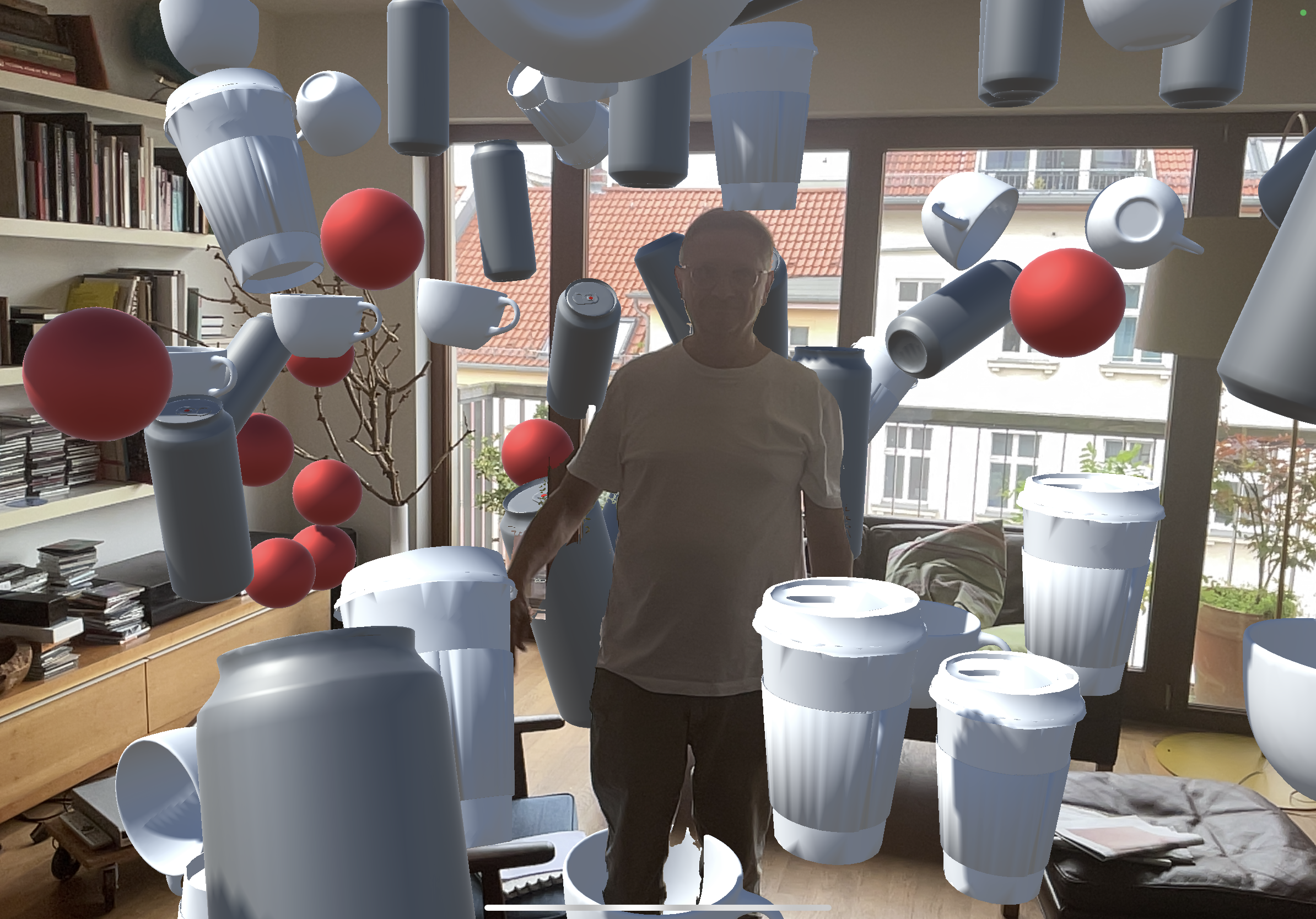
Chris admist floating objects.
Chris admist floating objects.
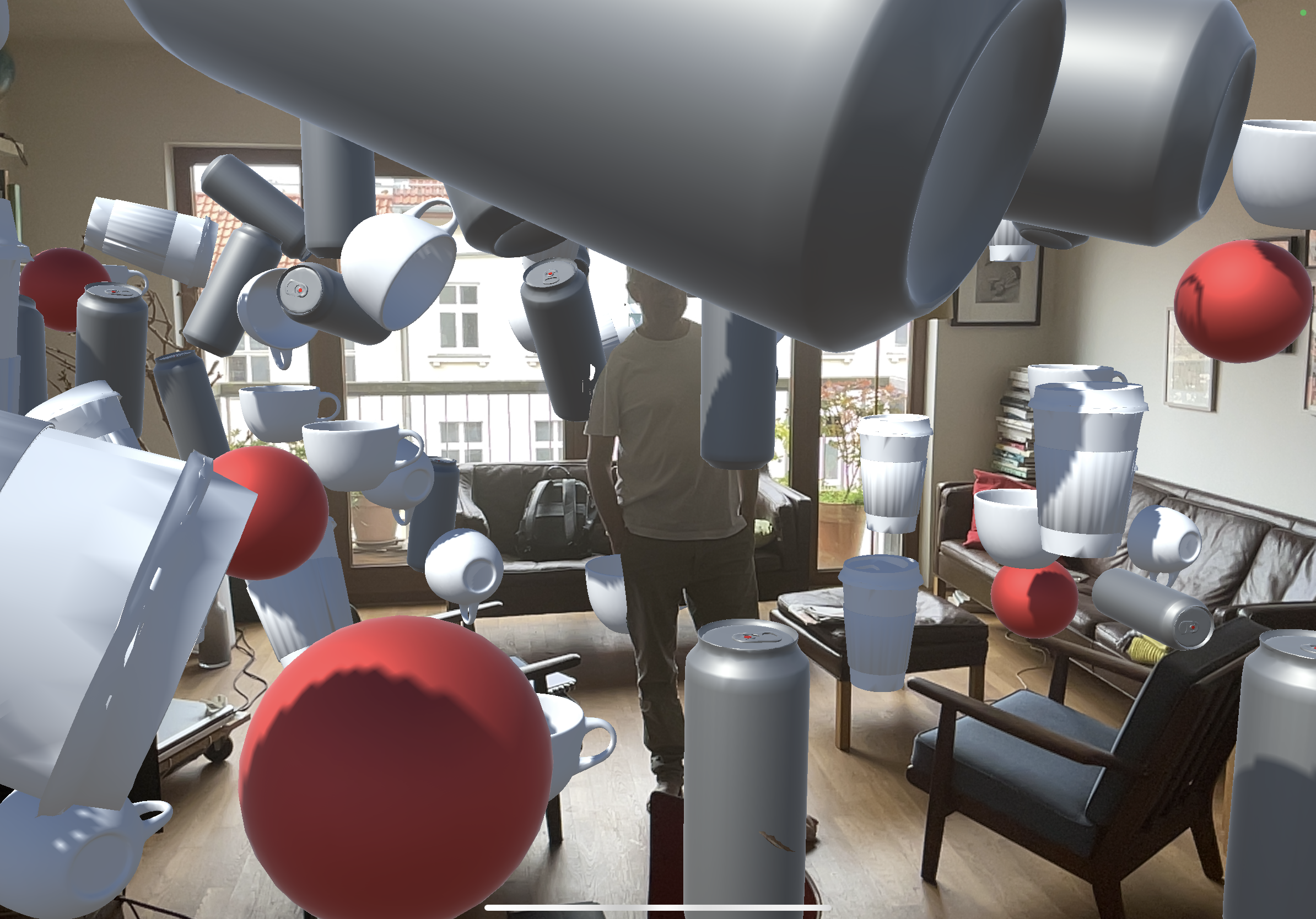
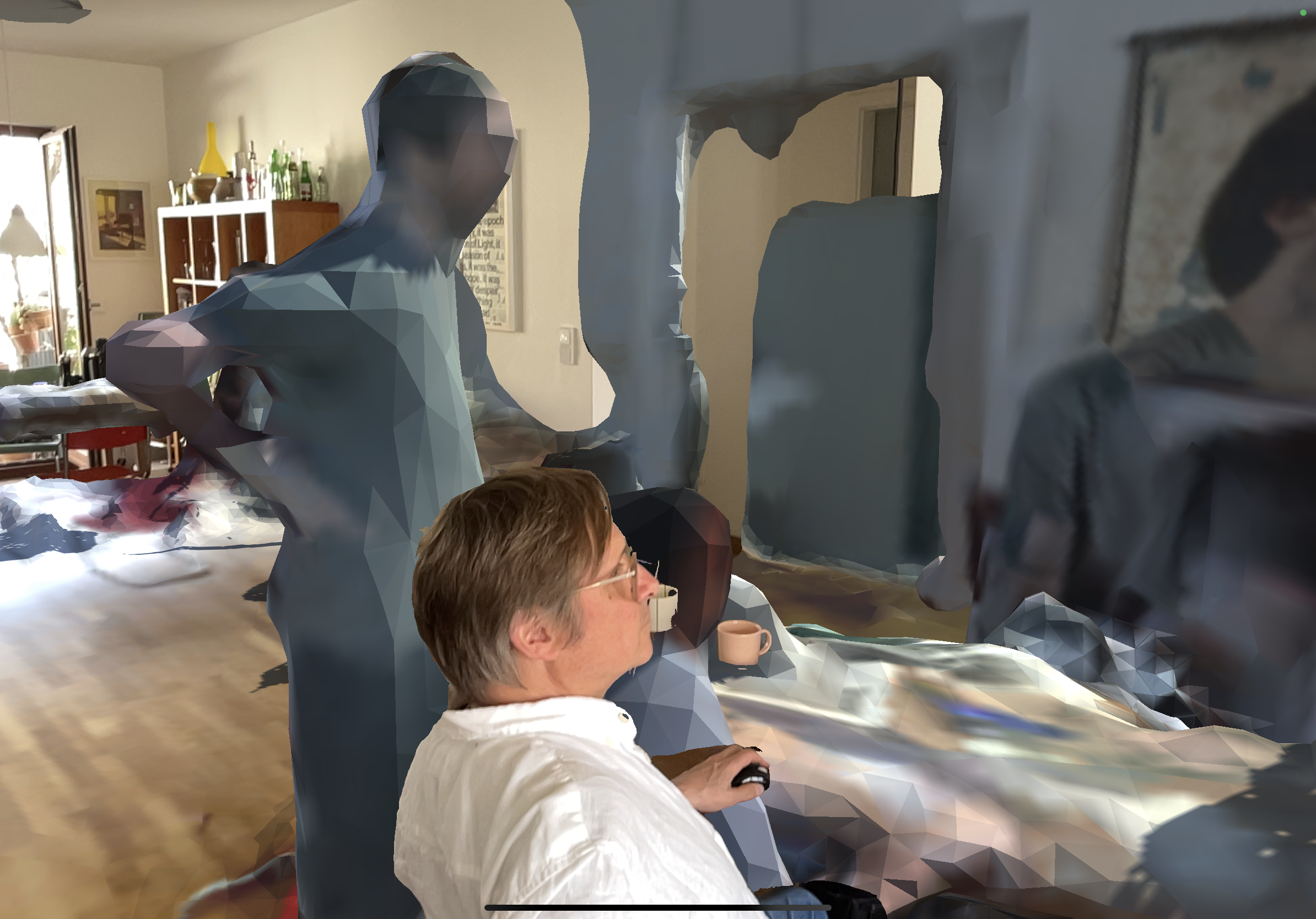
testing with people occlusion.
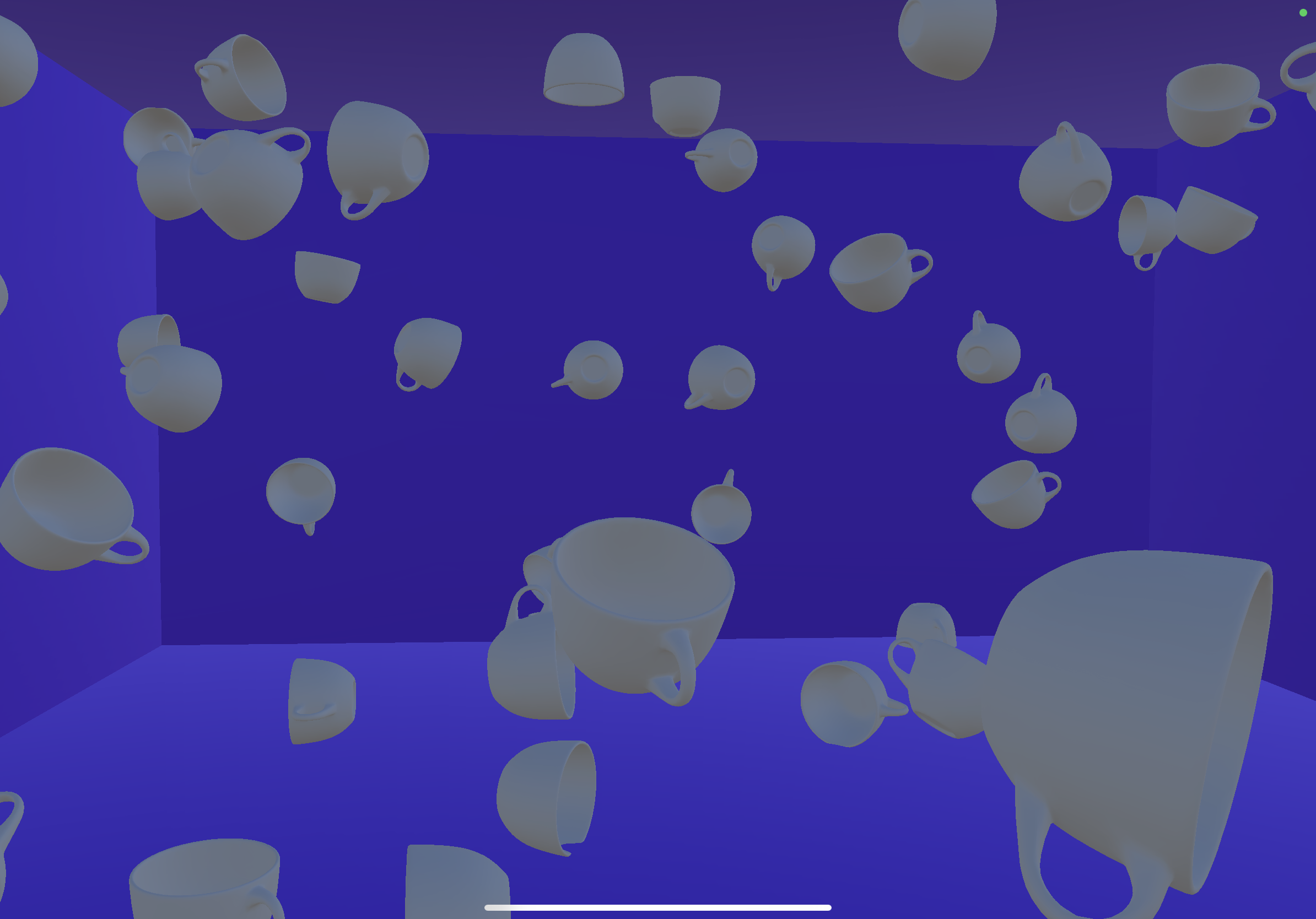
cups alone inside of room model.
Experiment wiht things buoncing of the walls, we remade the bouncing balls I made on tuesday, keeping the movment but replacing balls with random objects, filled the room with teacups!
also tested it with object vs. pepople occlusion. this correct occlusion.
learned how to instantiate many objects from one model.
today bouncing balls. tomorrow.....????
We're finding that we are getting stuck, its not clear where we are going, and because of that it's not clear what kind of world and/or objects we need to augment our space with.
today we start thinking about what objects we need, how to get them
Christiane has been doing photogrammetry tests. She spends the morning scanning a sneaker
Phillip needs to clean up the scene in Cinema 4D, removing the floor and everything.
we also downloaded a free particle generator effects, fire, fog etc.
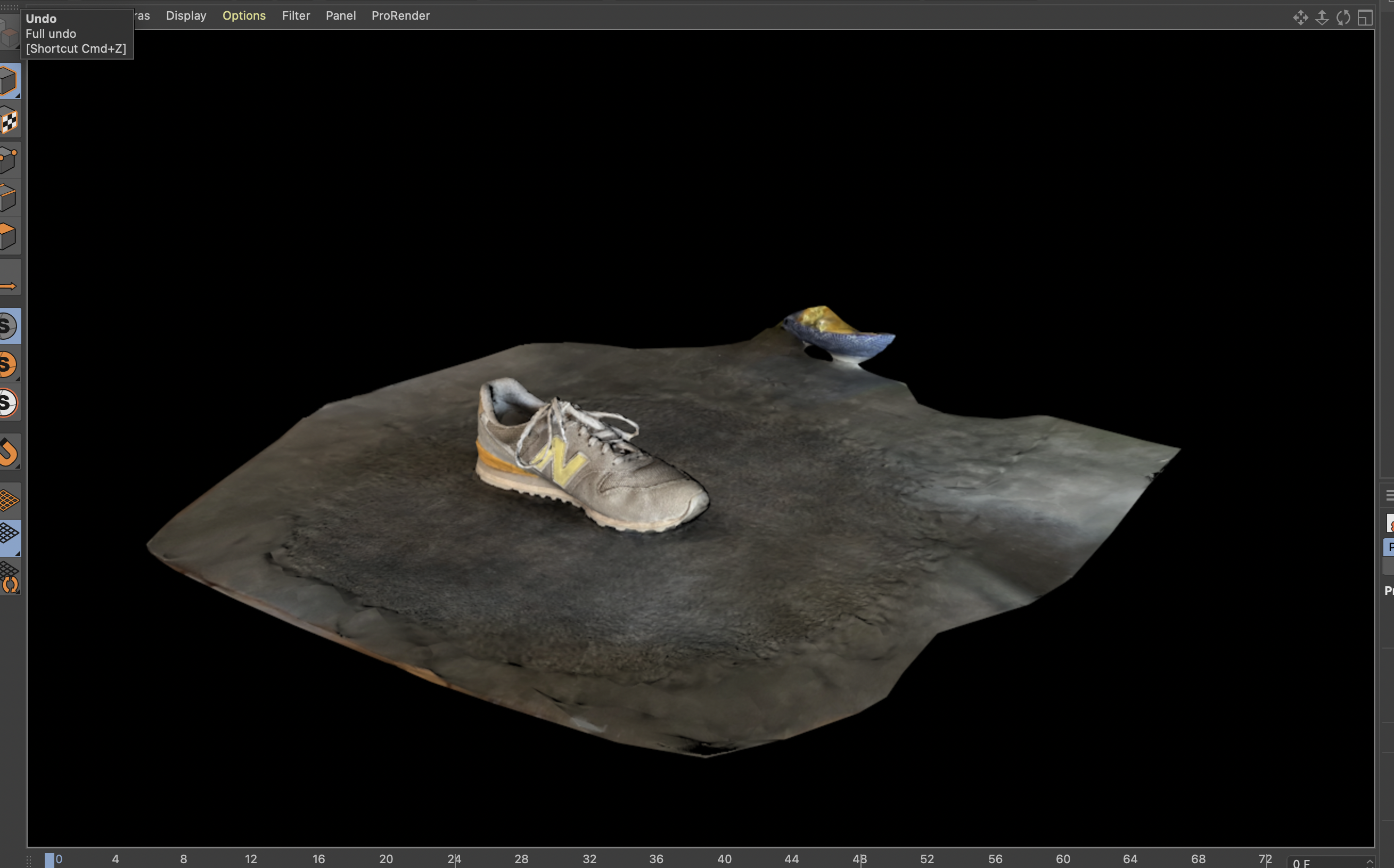
Sneaker Scan made with Polycam exported as .fbx file
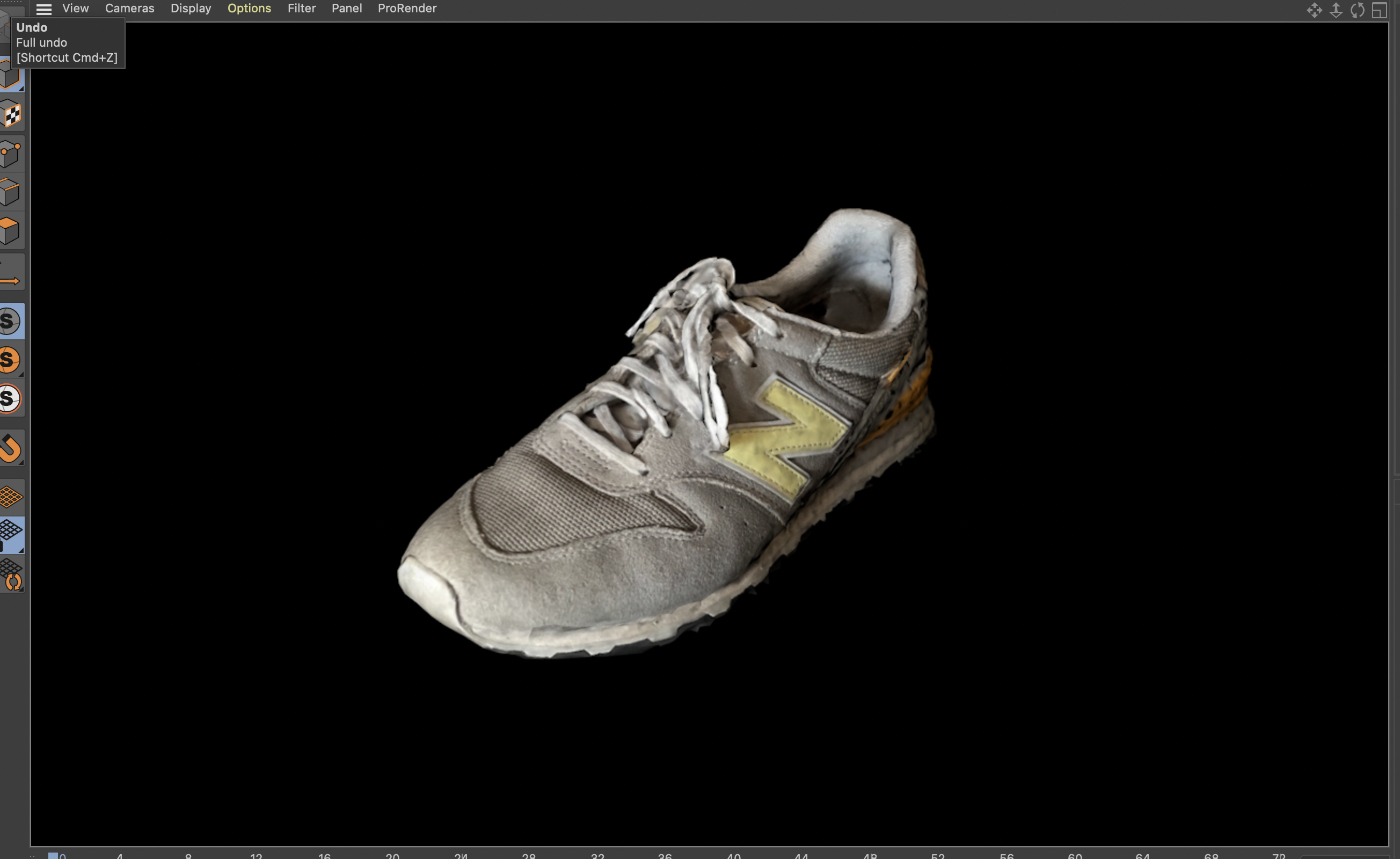
fixed in Cinema 4D
but it looks quite good.
Going through tutorials to find the best way to do photogrammatry.
first tip: do a scan of the whole object first, then go in for the details.
working with scans continues. The scanned images are both very intriguing and at the same time filled with artifacts, missing bits, ragged edges.
they alsways look like a nightmare ruined version of the thing scanned.
We are still thiking about wierd doubles. Digital Souls.
here are some simple objects scanned, that can then be manipulated. rotated etc.
there is a certain joy in being able to look at thing from all angles.
scanned objects, digital doubles placed near or on their real world counterparts
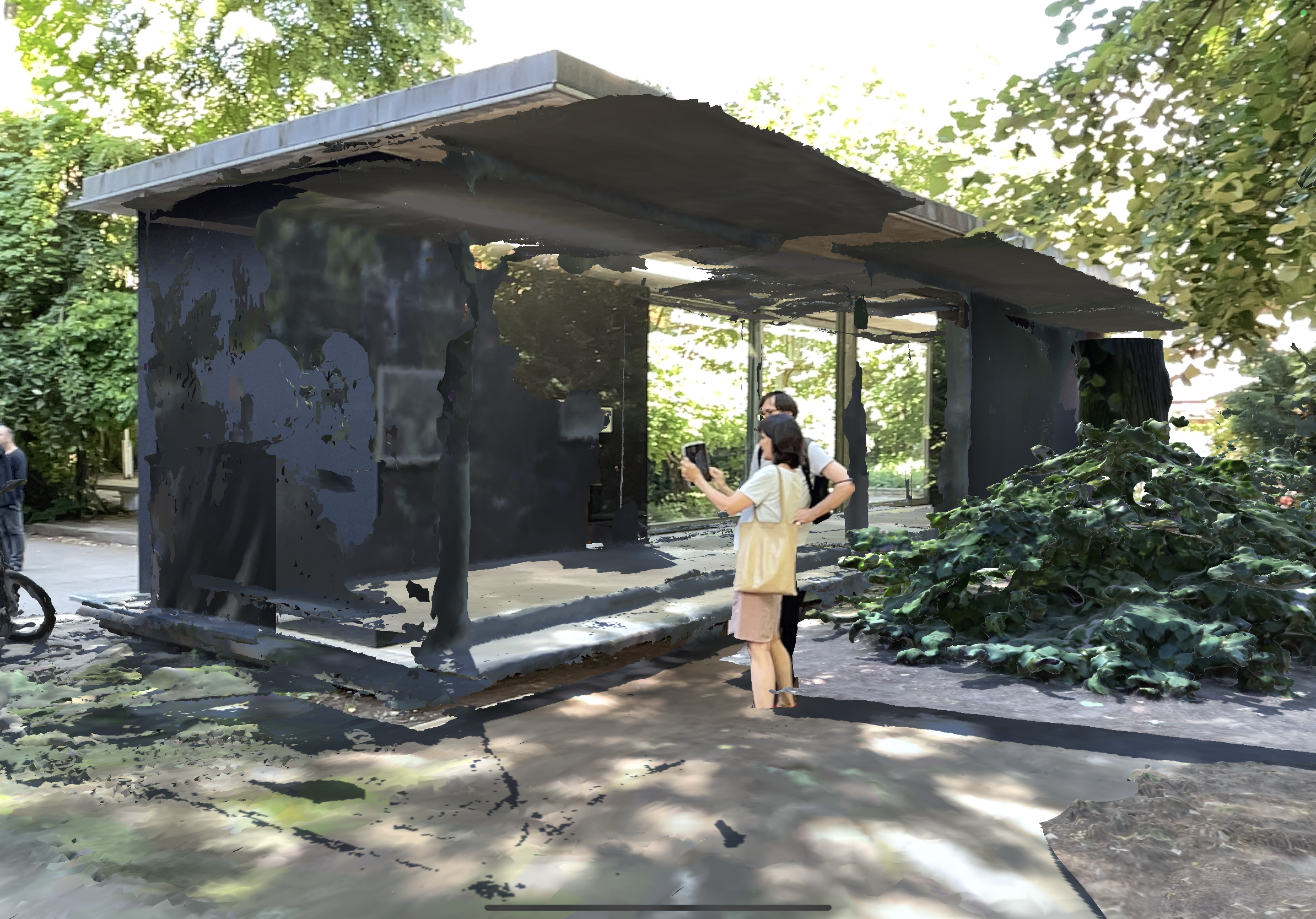
A scanned version of the gallery placed on the gallery
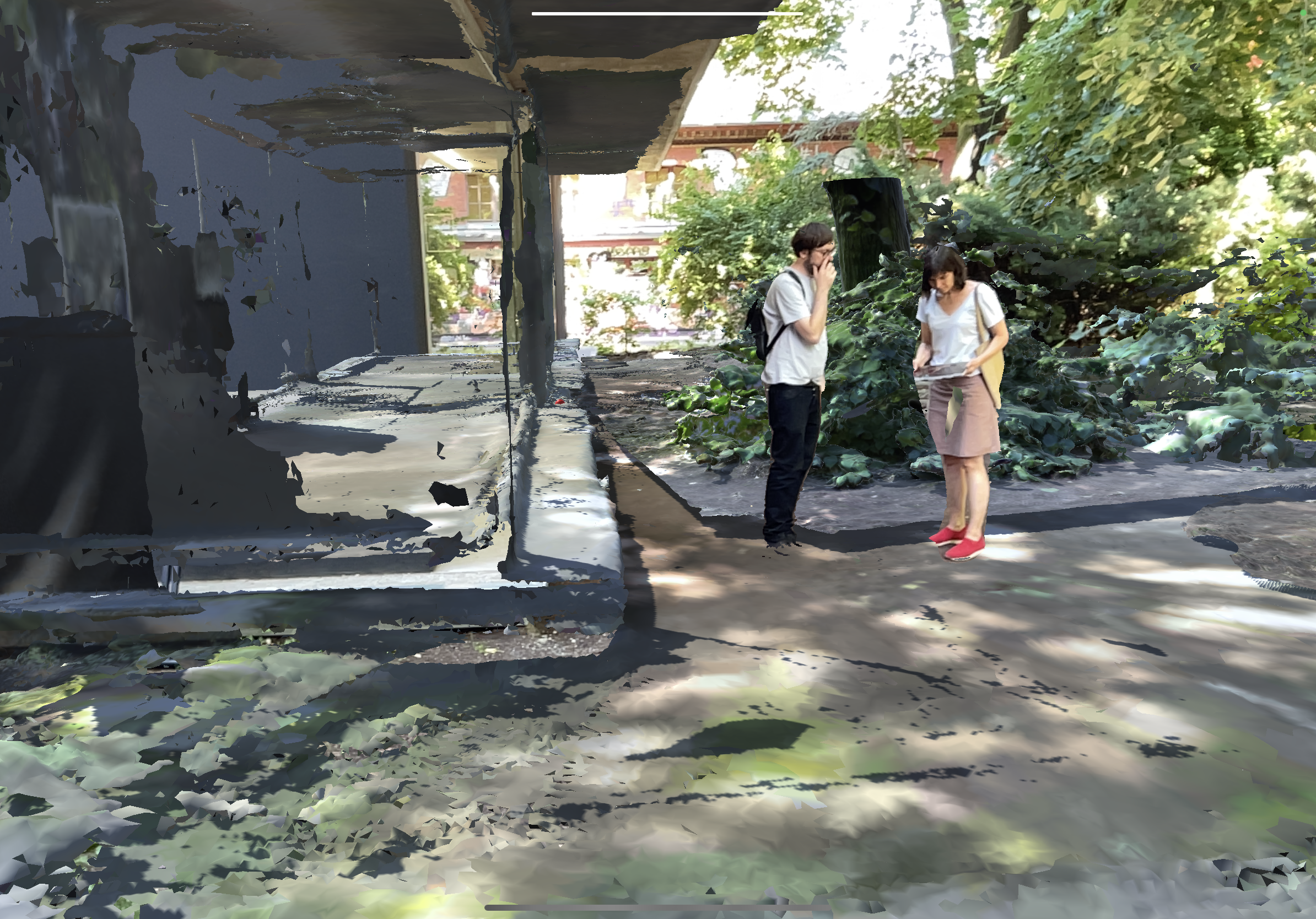
A scanned version of the gallery placed on the gallery
Our first AR project is part of an installation series at Milchhof. We will build somehting for one evening.
The site of the installation is this gallery space outside in the courtyard.
Gallery ar Milchof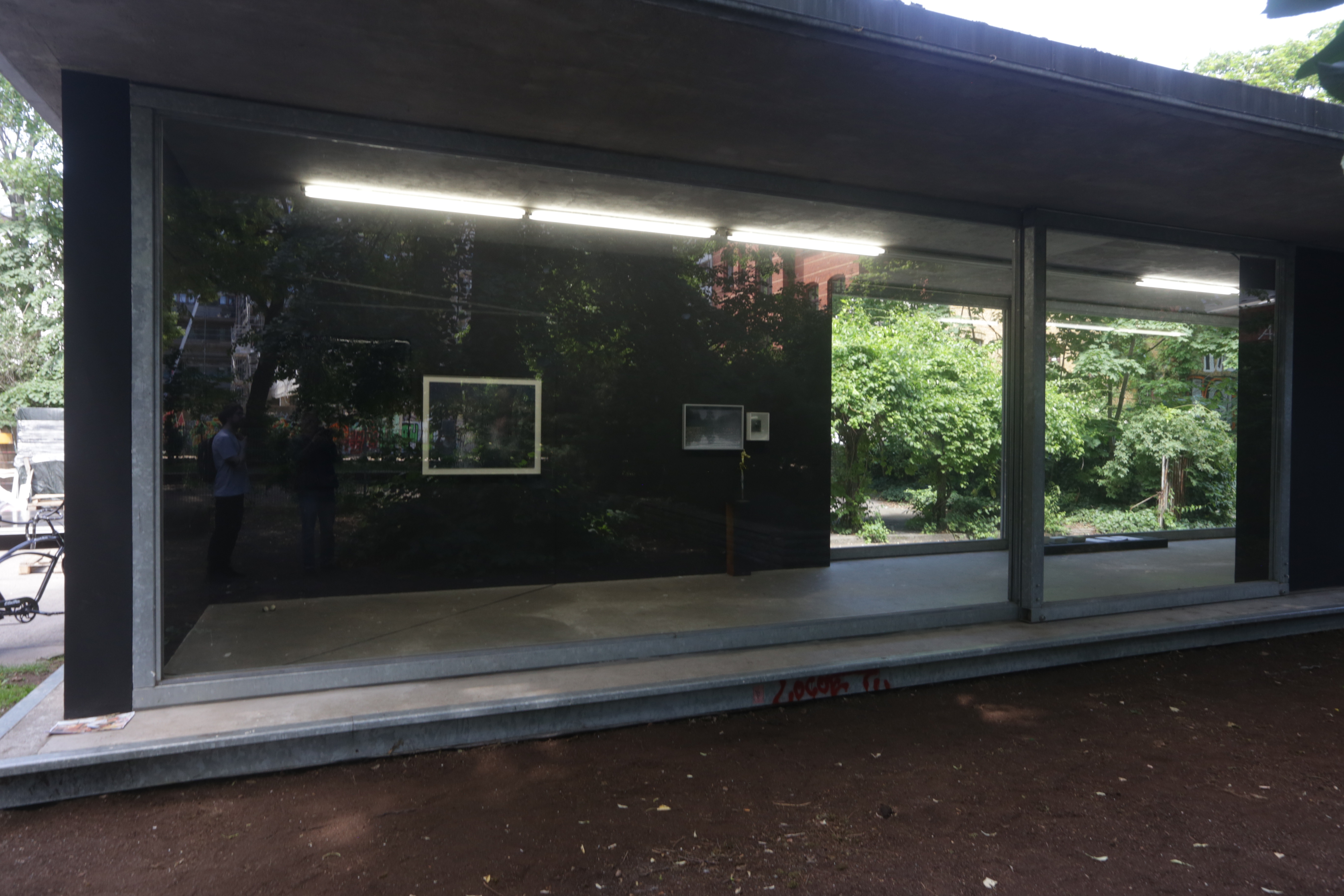
this actually involves a lot if different skills. most of which deal with how to get the right size and placement.
Gallery filled with black cube.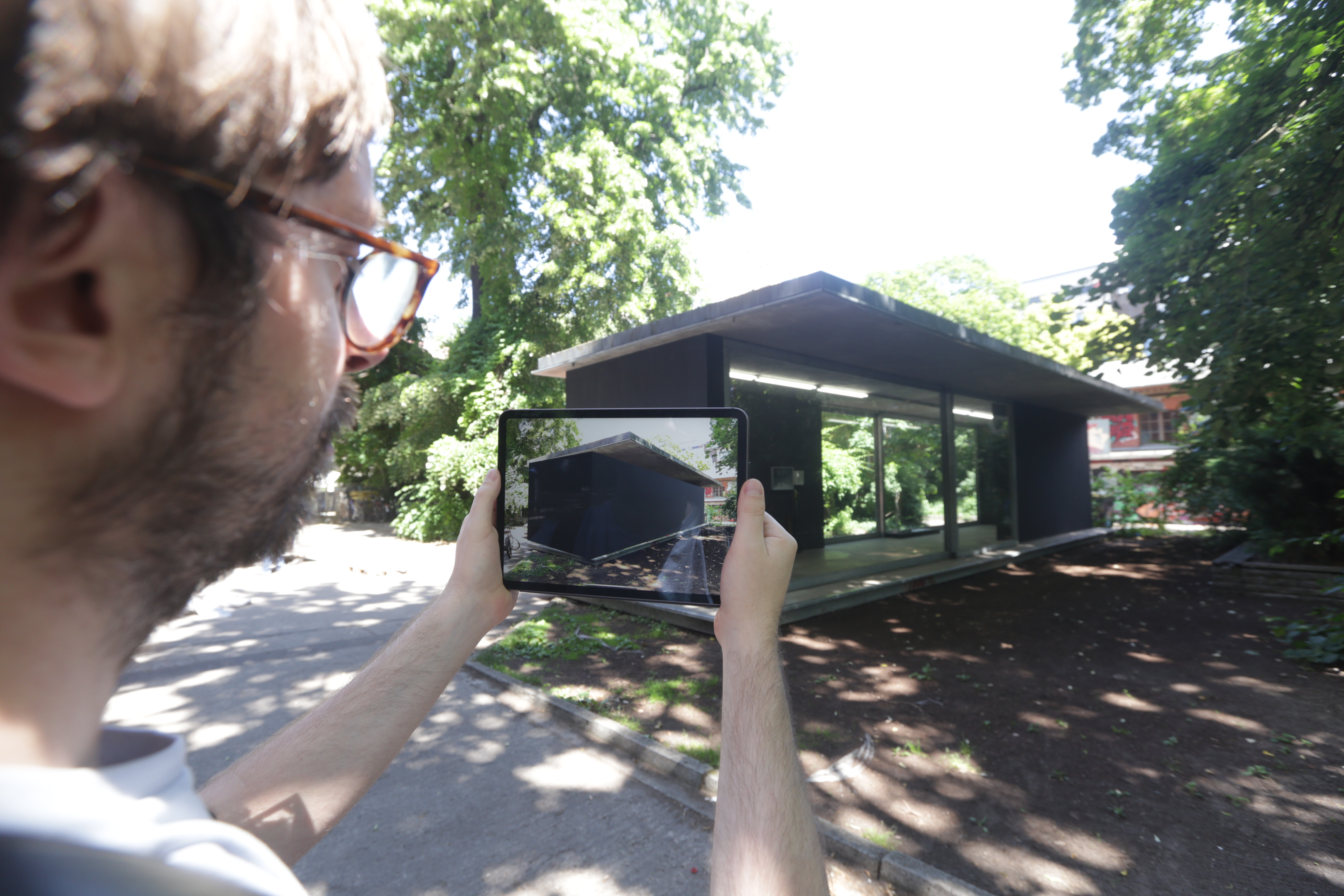
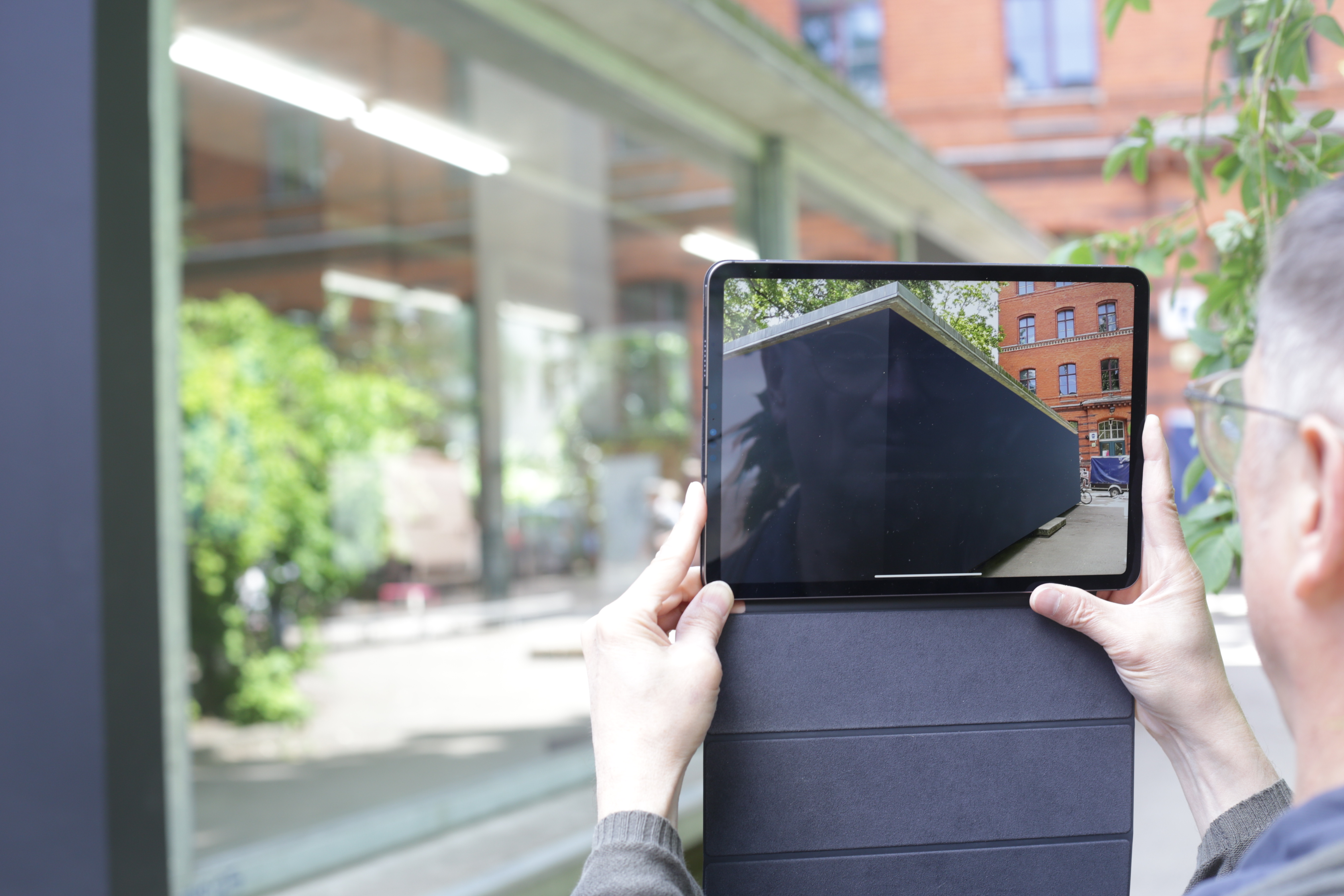
Gallery filed with black cube
we keep comming back to the idea of making duplicates for the space. Photogrammetry tools on the tablets seem to be a very interesting way to go
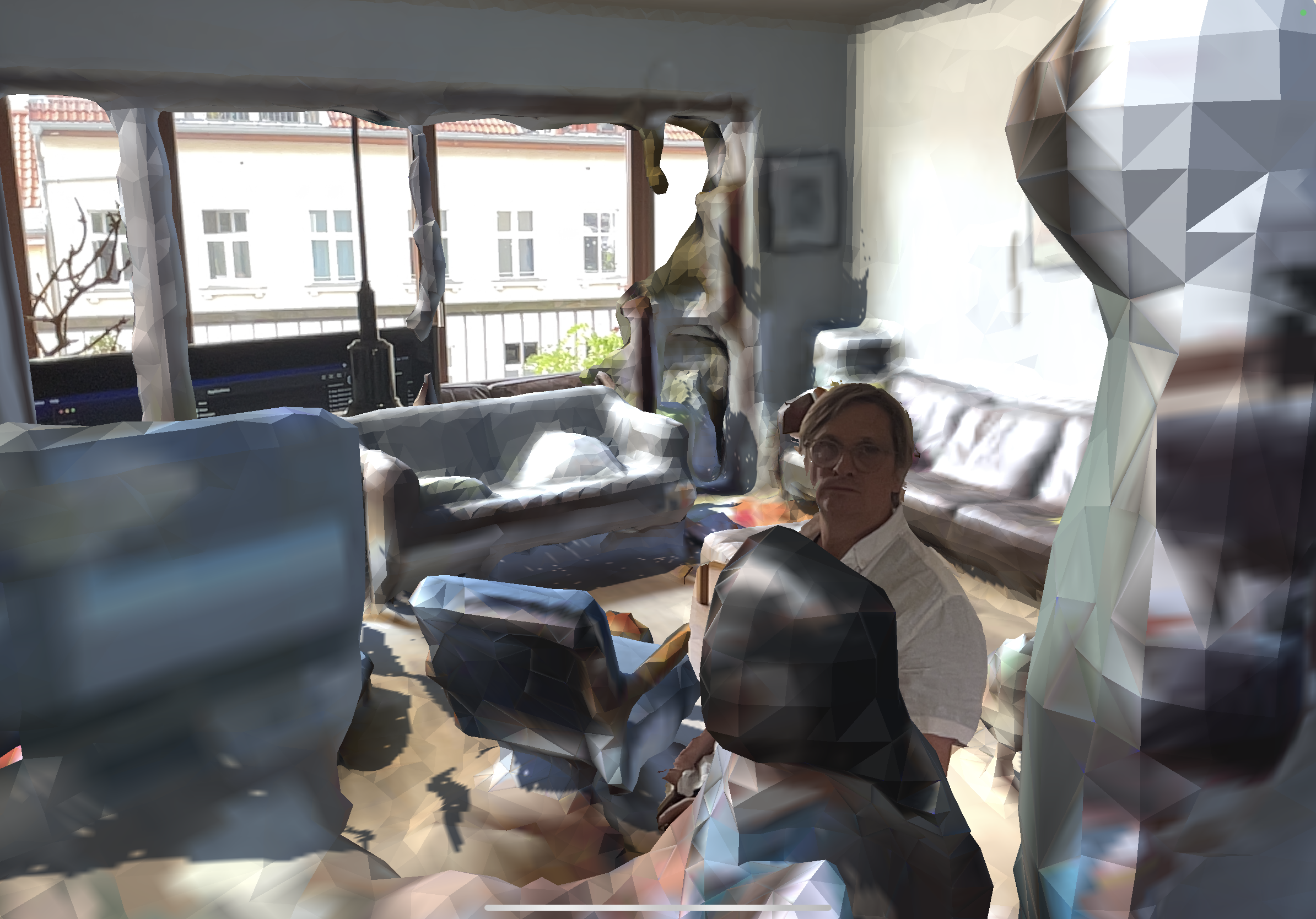
Scan of workspace collages live with the real work space.
It starts to get quite trippy/spooky
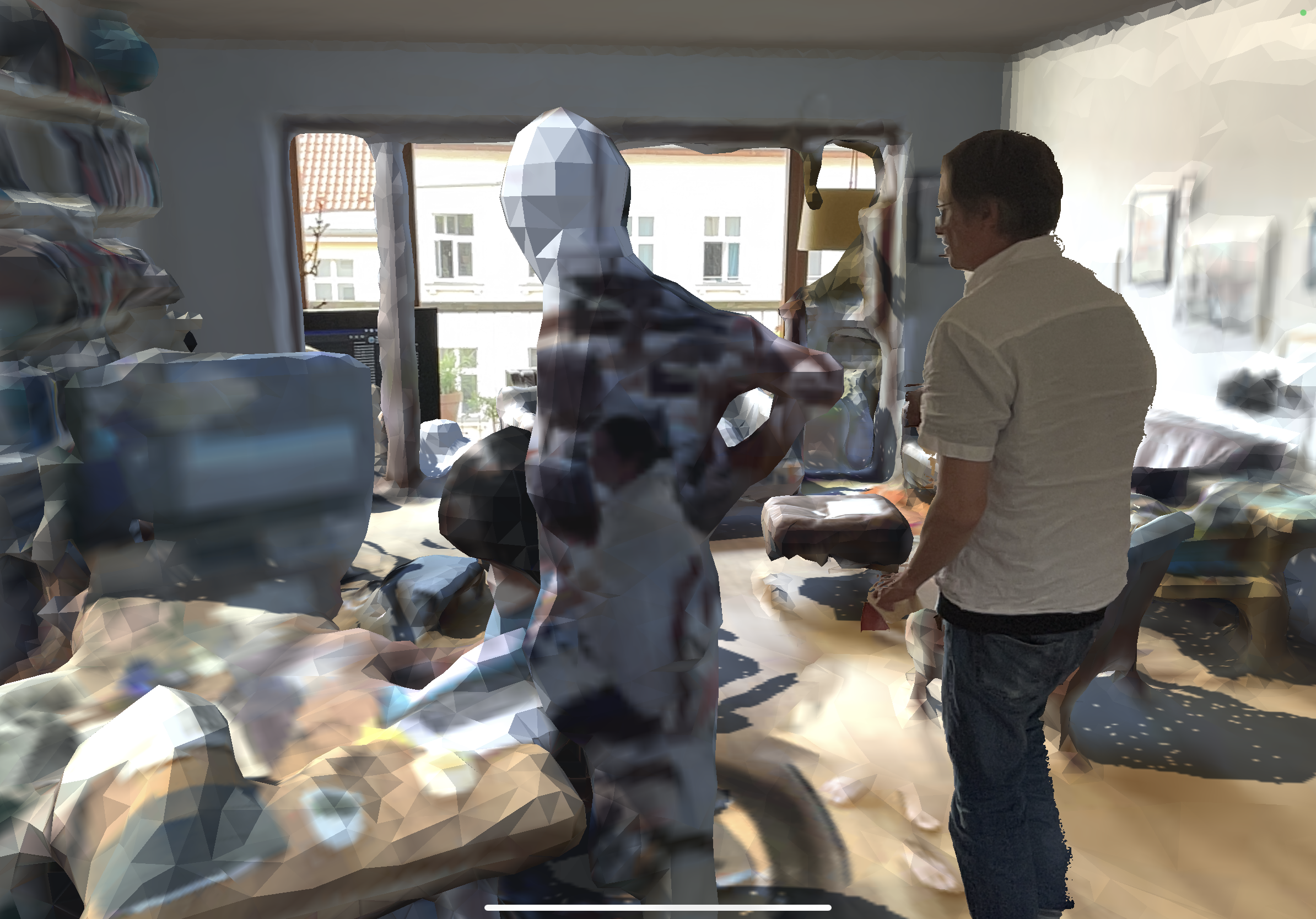
Everything has a secret life.
it's been a long time since last enrty. In between the project at the Münchner Kammerspiel has happend and a lot was learned to make that possible.
we are now in a search to build and environment for the "Unter dem Pflaster" exhibition at Miclhhof
We have a Glass Pavillion and the surrounding area to work with.
We are working in Unity using image tracking. We will have one image that will orient our virtual layer.
various experiments:
we tried putting objects in the space, and also layereing flat planes on the space.
i seems that putting things in the space was somehow difficult, we weren't happy with how the objects sat int he room, and how the image occlusion was working.
On the other hand covering one side with a flat panal holding a video seemed to bring something
we built a giant black cube
Vuforia with Unity seems the simplest. Seems to have the most out of th box features.
However we can't find out if Vuforia can use the occlusion feature of the new Apple LiDAR sensors, additionally Unreal Engine seems to be easier to use to create a cool environment
still at the begining however.
It seems to me that to make sense you need to fidn a way that what you add to the real world needs in someway to feel connected ot he real world.
In some way generated by the real world.
as if the real world has a secret, that it's letting out.
Another good example of AR is the Carpenter Moive, where soemone gets those glasses that see the truth.
What was the name again. oh yeah -> They Live
------------------------------
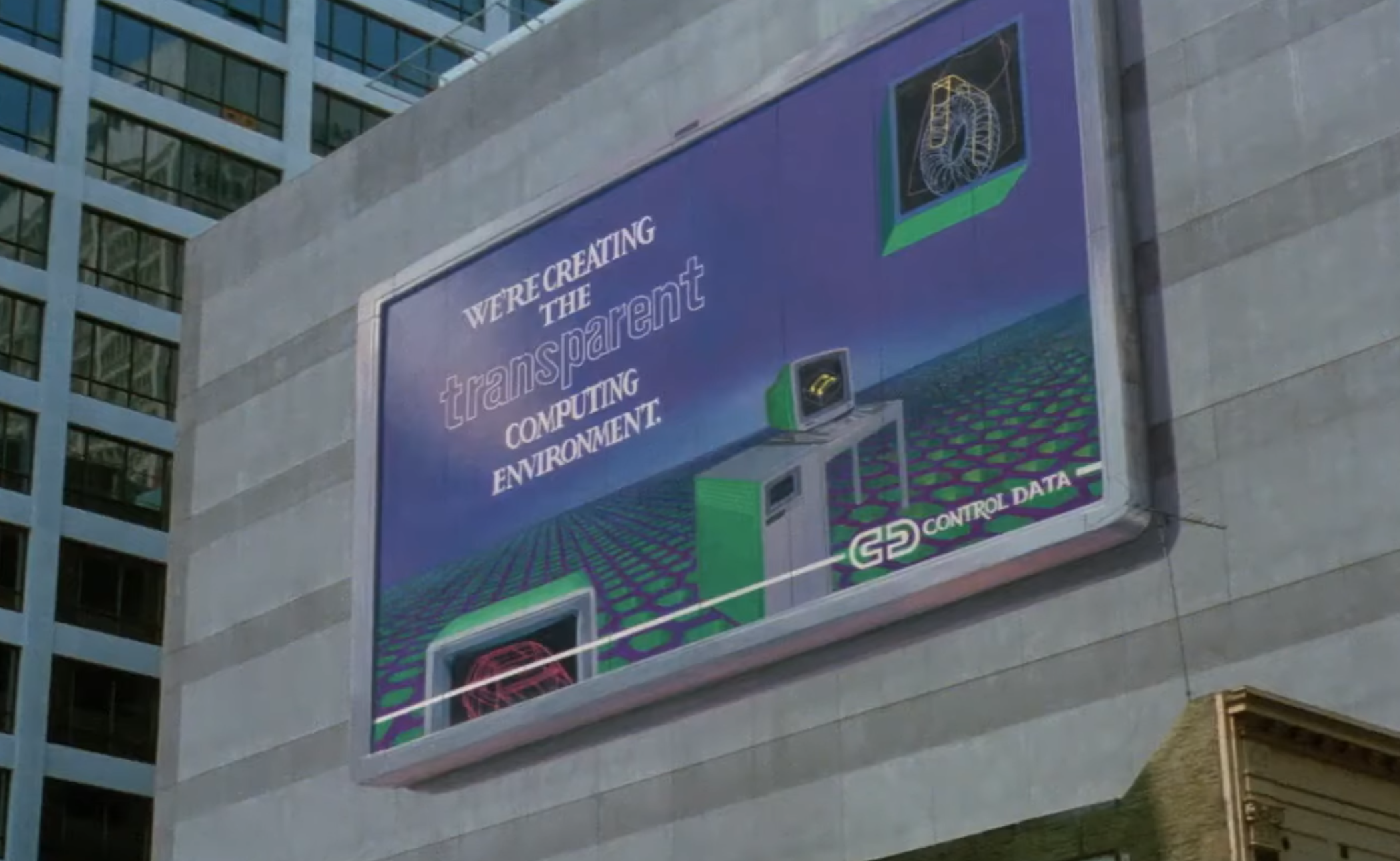
A Normal Object in the world.
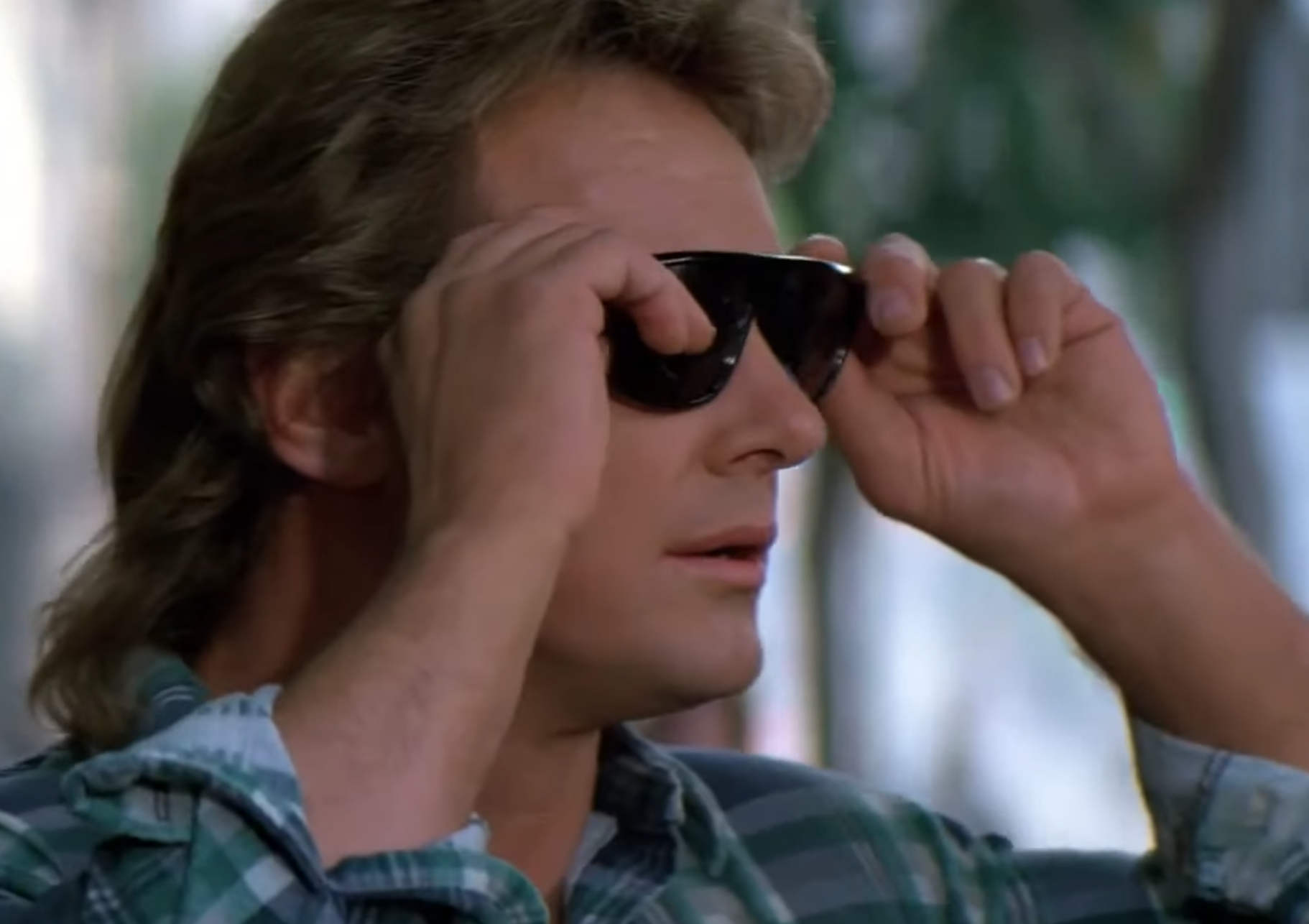
Is revealed to have a secret interior.
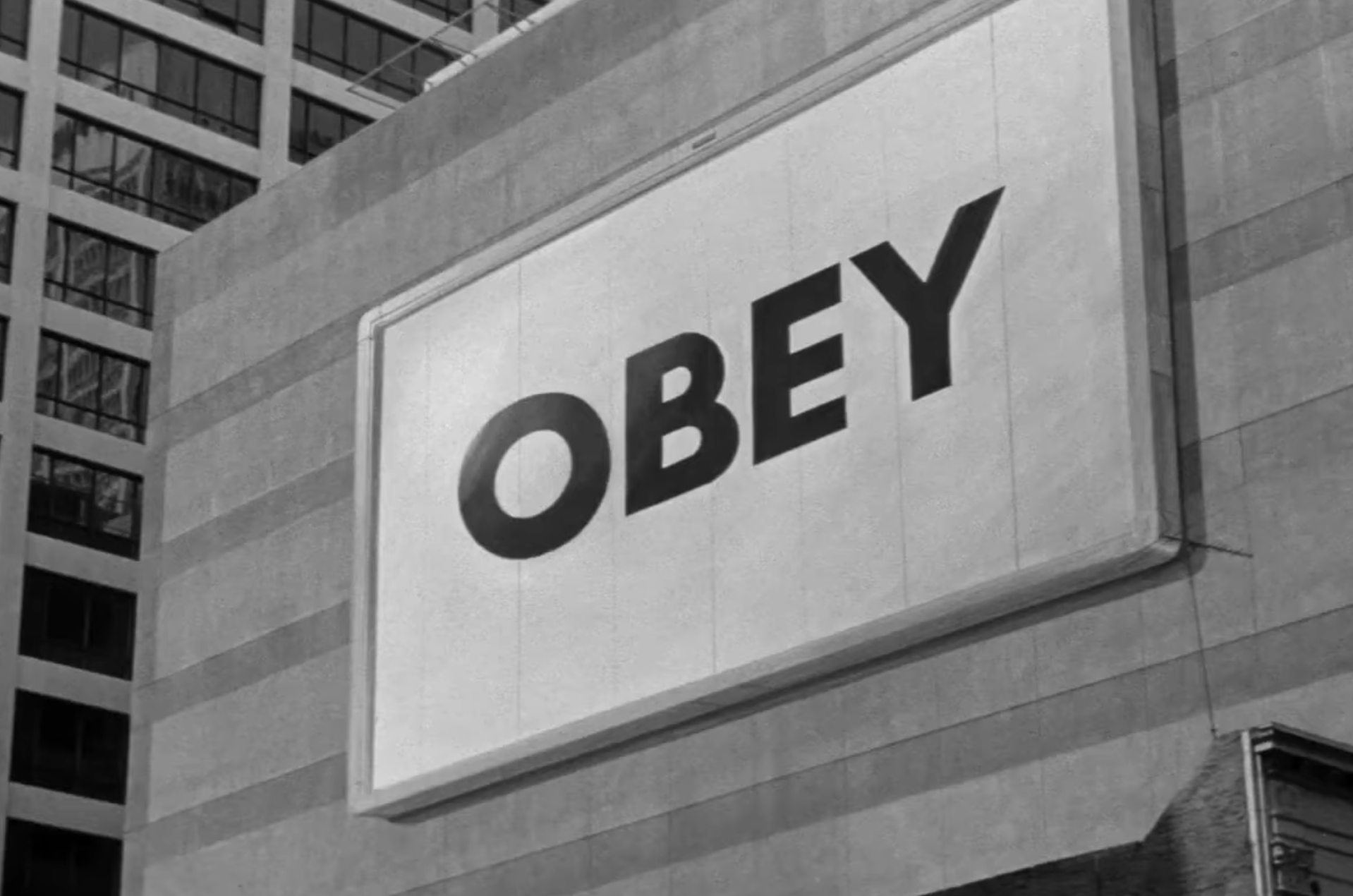
Augmentation in this case flips the inside to the outside
-----------------------------------
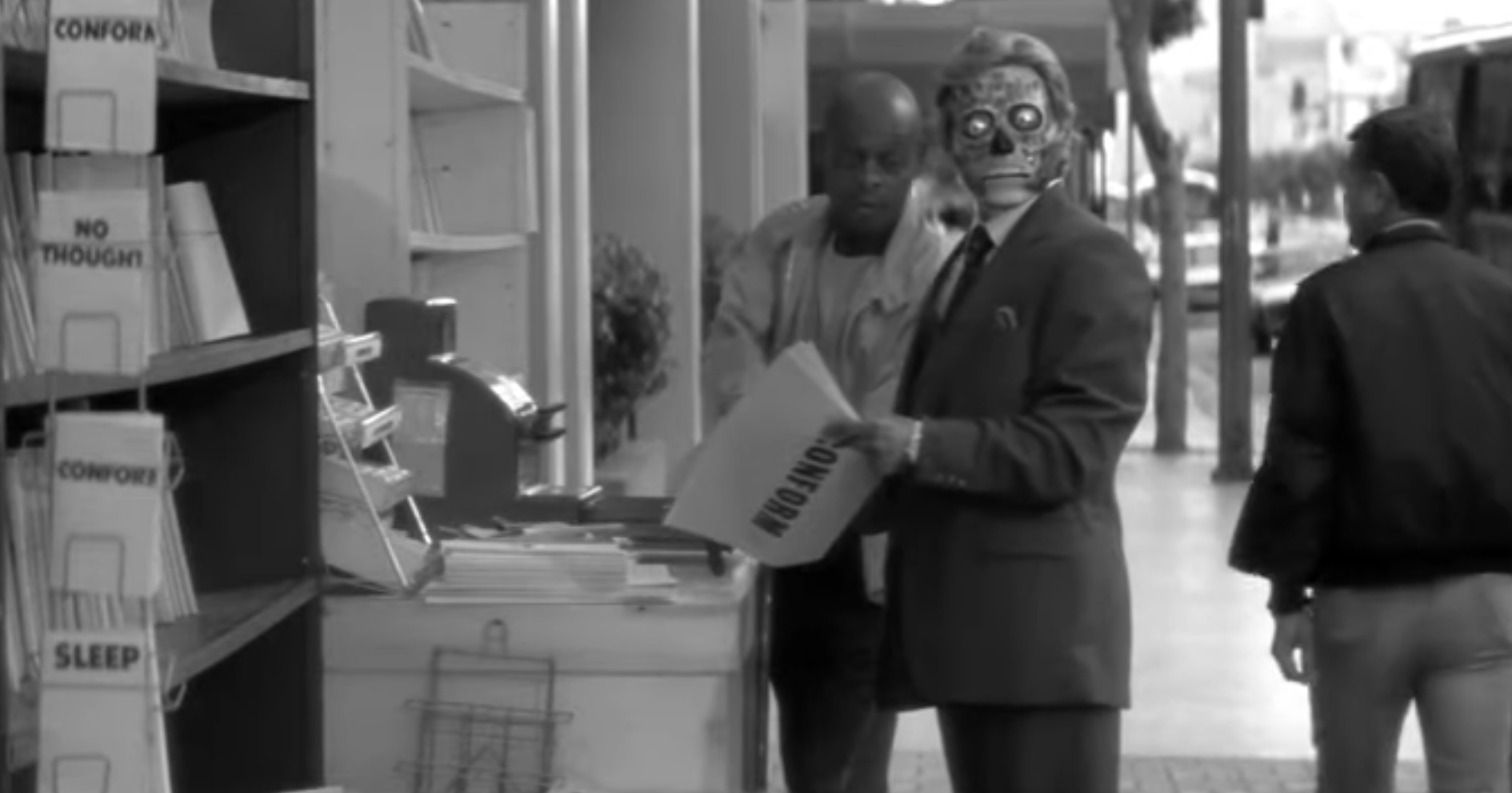
HUmans as well as objects get this treatment.
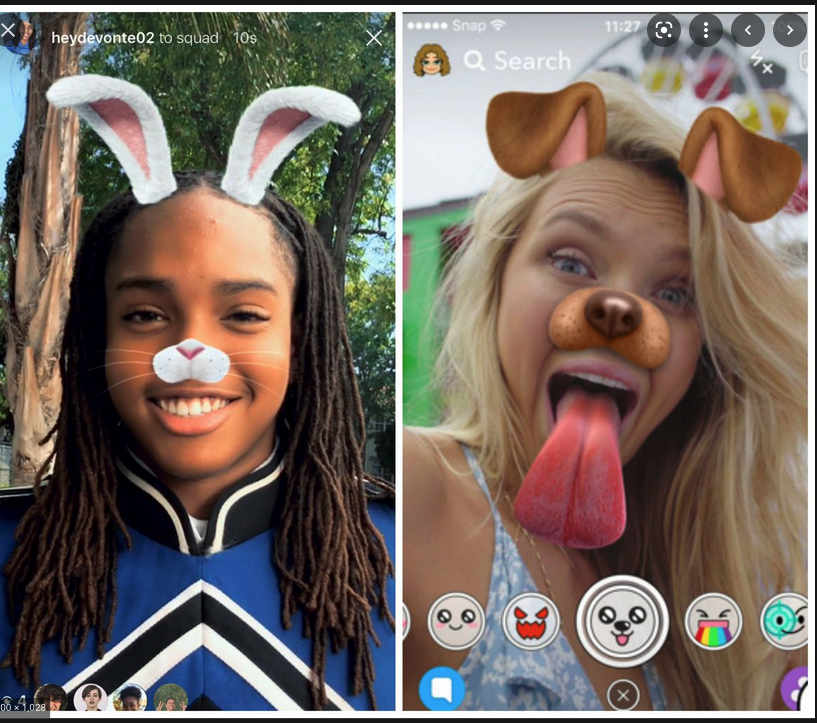
This is somehow different from the snapchat/instagram face overlay. A silly addition vs. a hidden truth.
----------------------------------------
Could this be a way to talk abou the difference between good AR and bad AR.
------------------------------------------
How to best Anchor 3D Objects with AR app?
How to make sure that objects stay in place when restarting an app?
How to quick set up if app is restarted?
If we use markers, how would 3D Objects animate in/out if markers are off screen? How would 3D Objects behave in general if markers are off screen?
Or how to set up app in order to keep objects in right position if no markers are used and app is restarted?
How could the iPad keep track where it is located in the room? sync to some kind of coordinate systempossible?
How to use multiple markers in one AR Project?
How to do triggers in unity?
- Sound-triggers
- Animationtriggers
- Tapping triggers
Are there other interesting trigger possibilities?
------------------------------------------
first week gallery
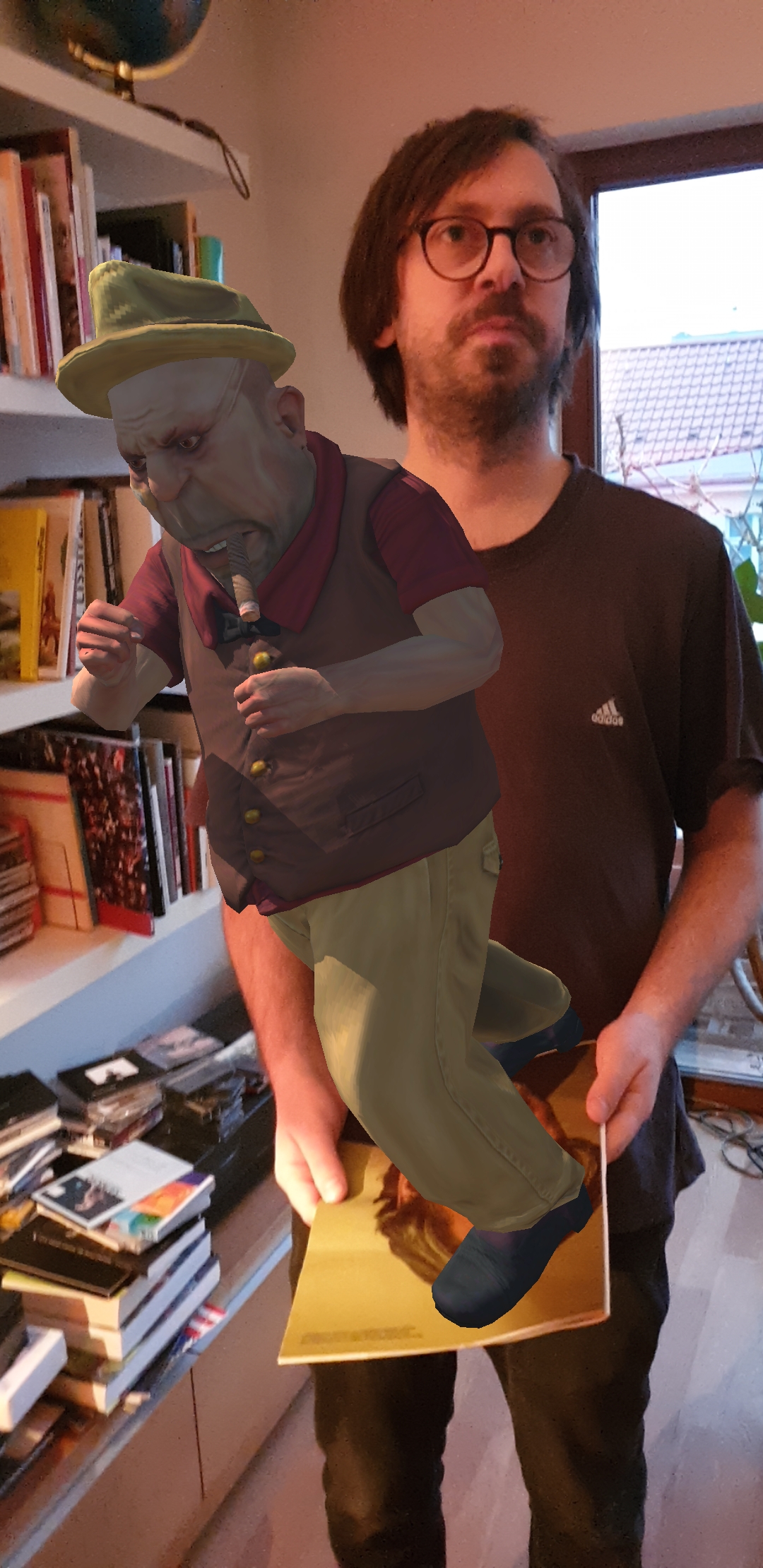
Scanned Bathroom
virtualizing real objects
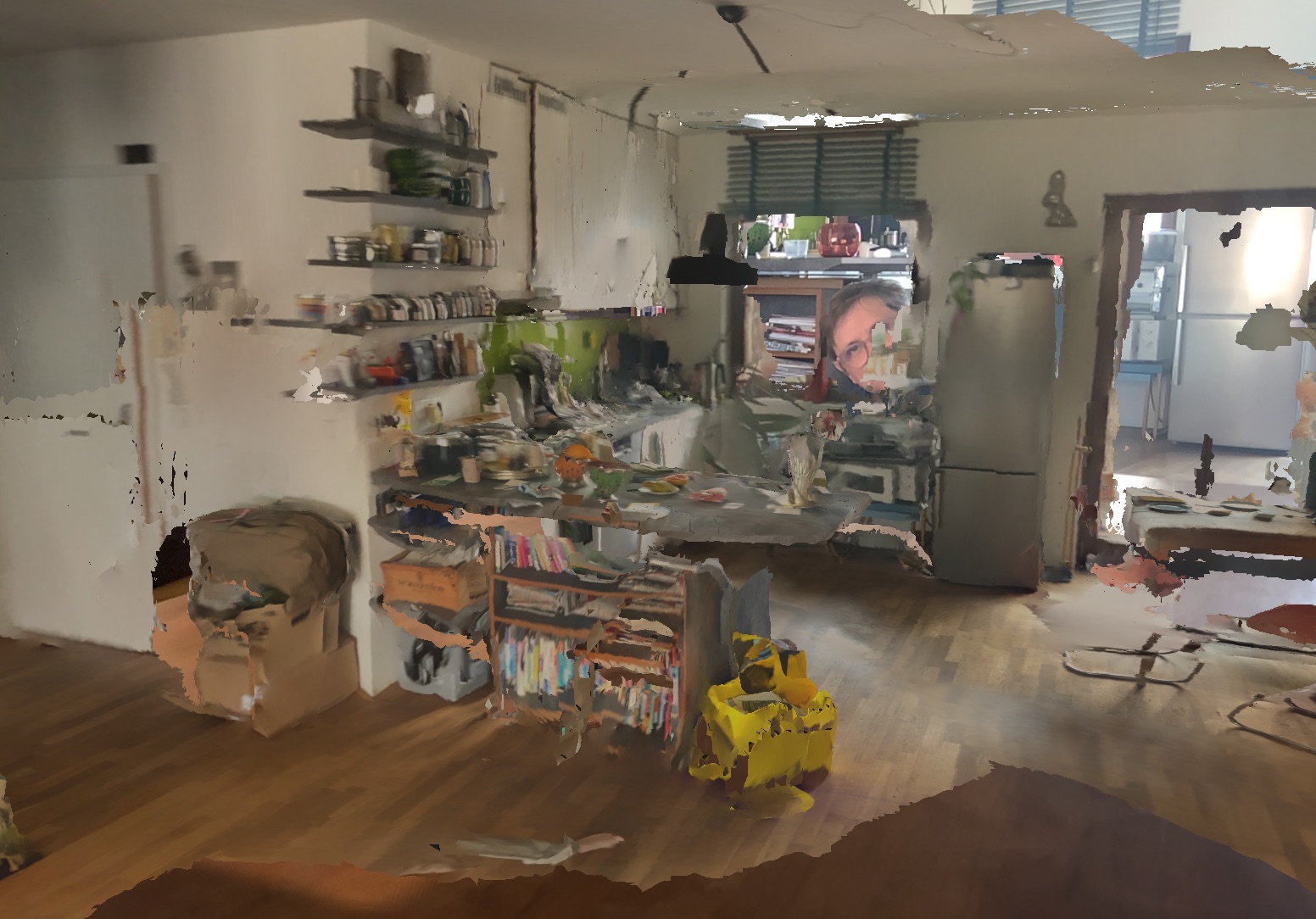
Living Room Scanned
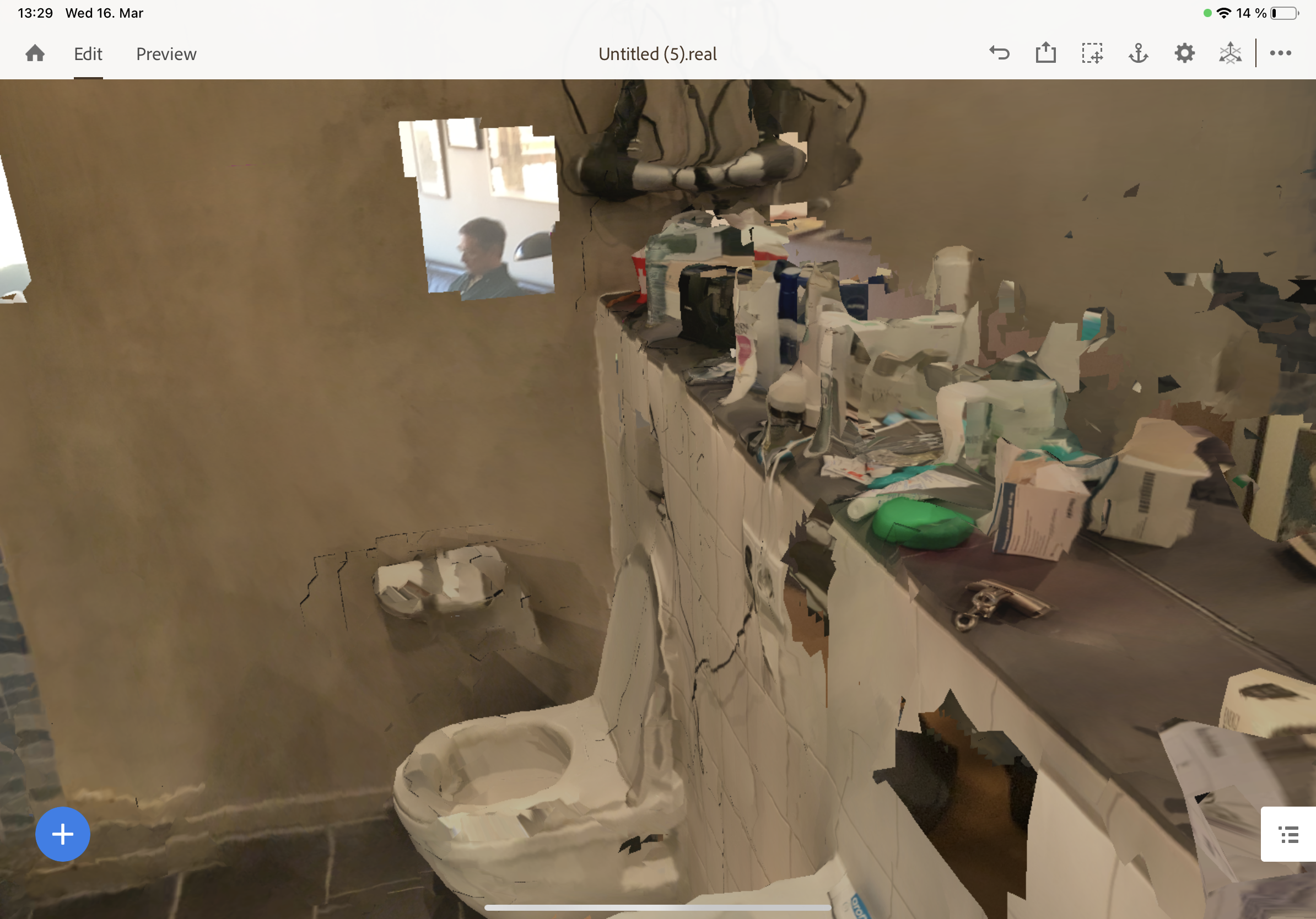
Scanned Bathroom
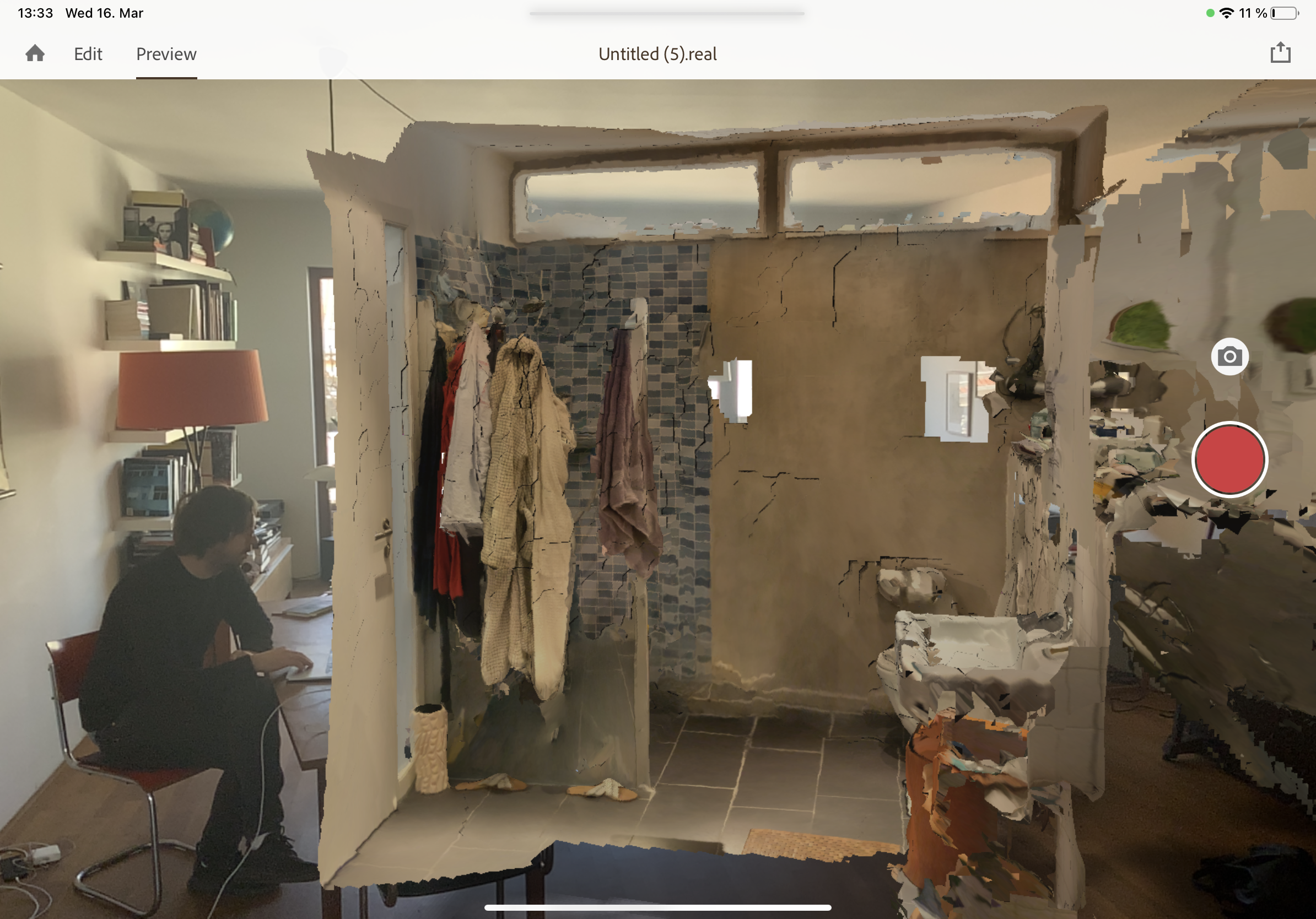
Scanned Bathroom
------------------------------------------
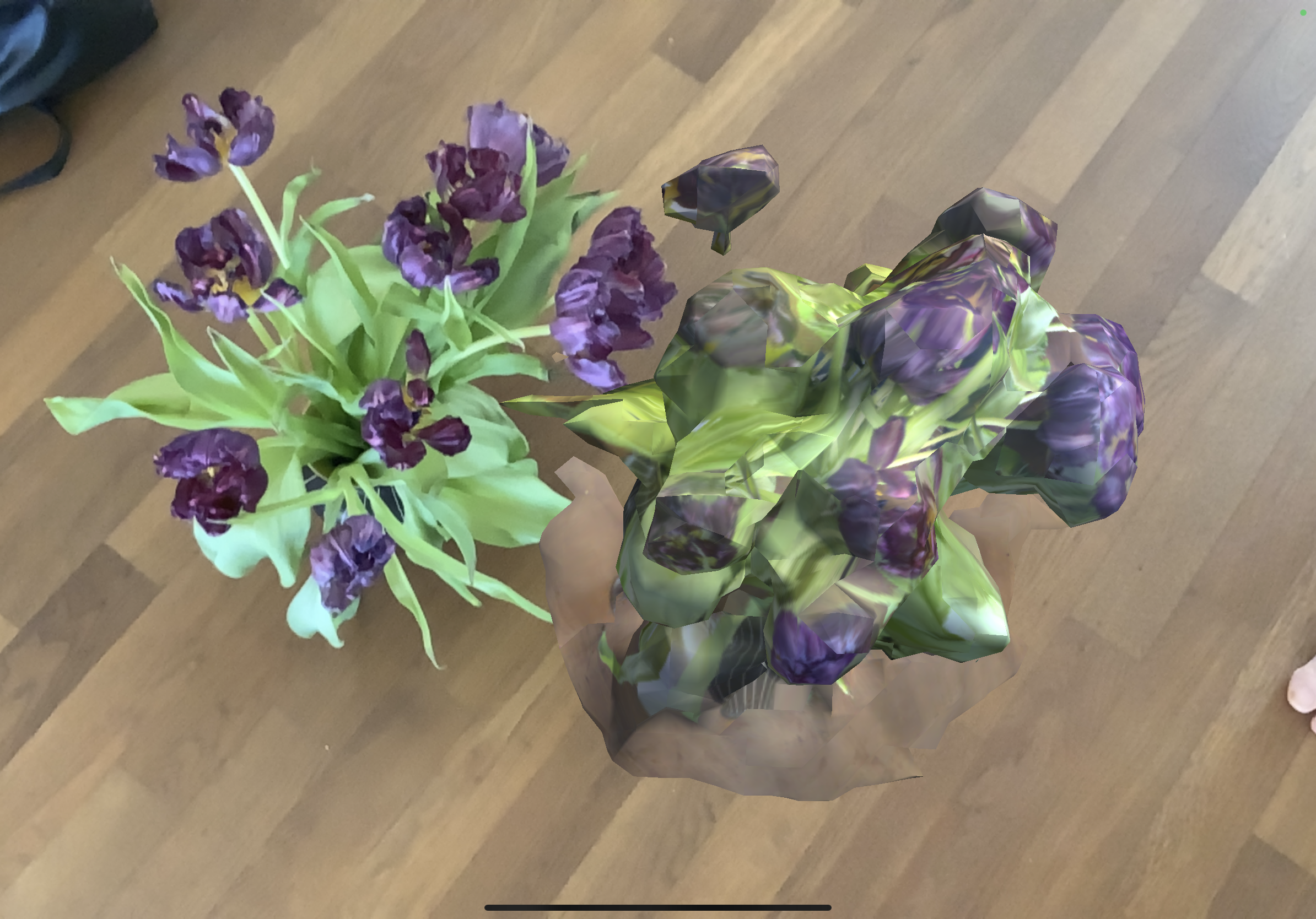
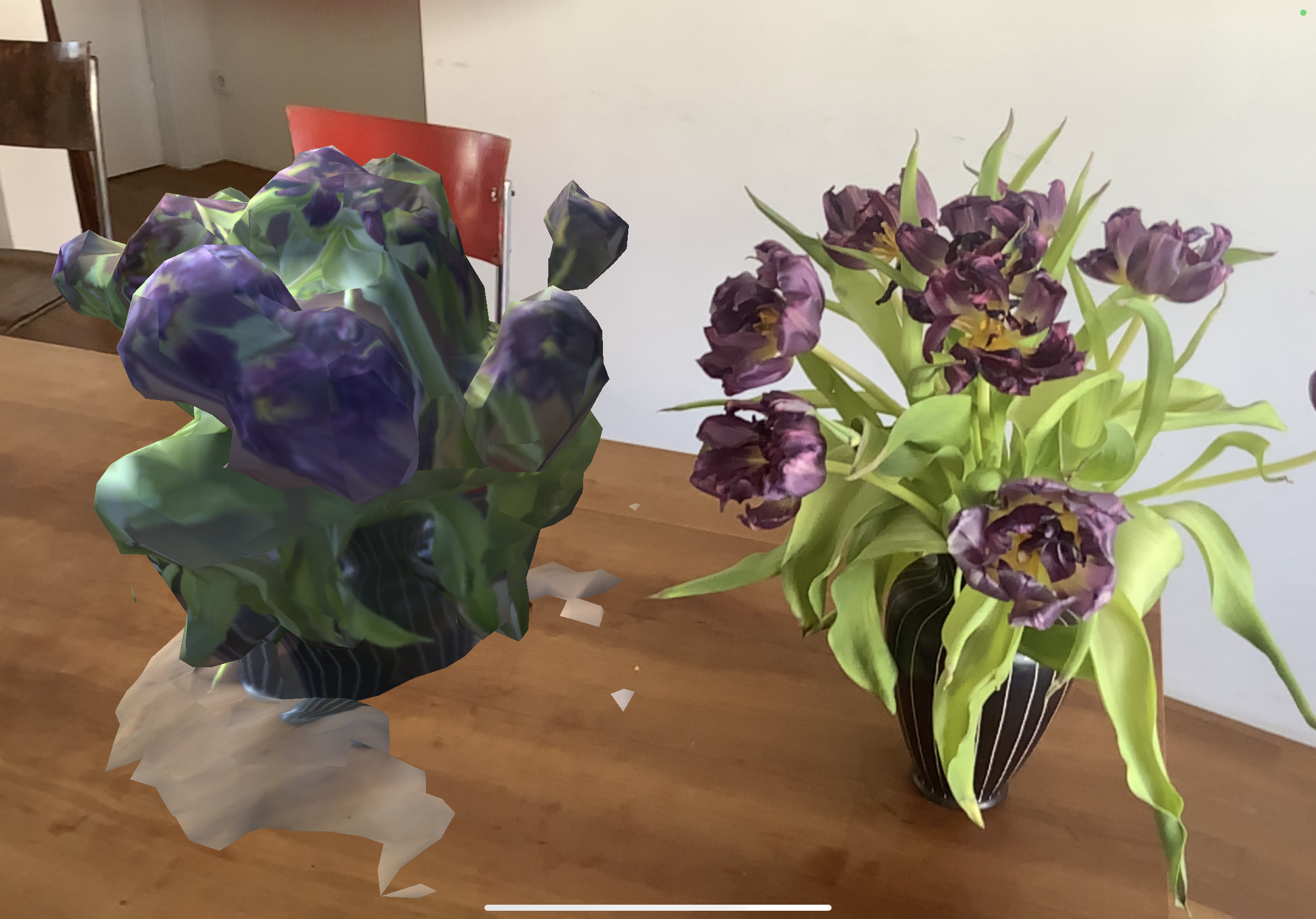
we scanned the flower vase to turn it into a 3D object and then planted it next to the the real thing
------------------------------------------
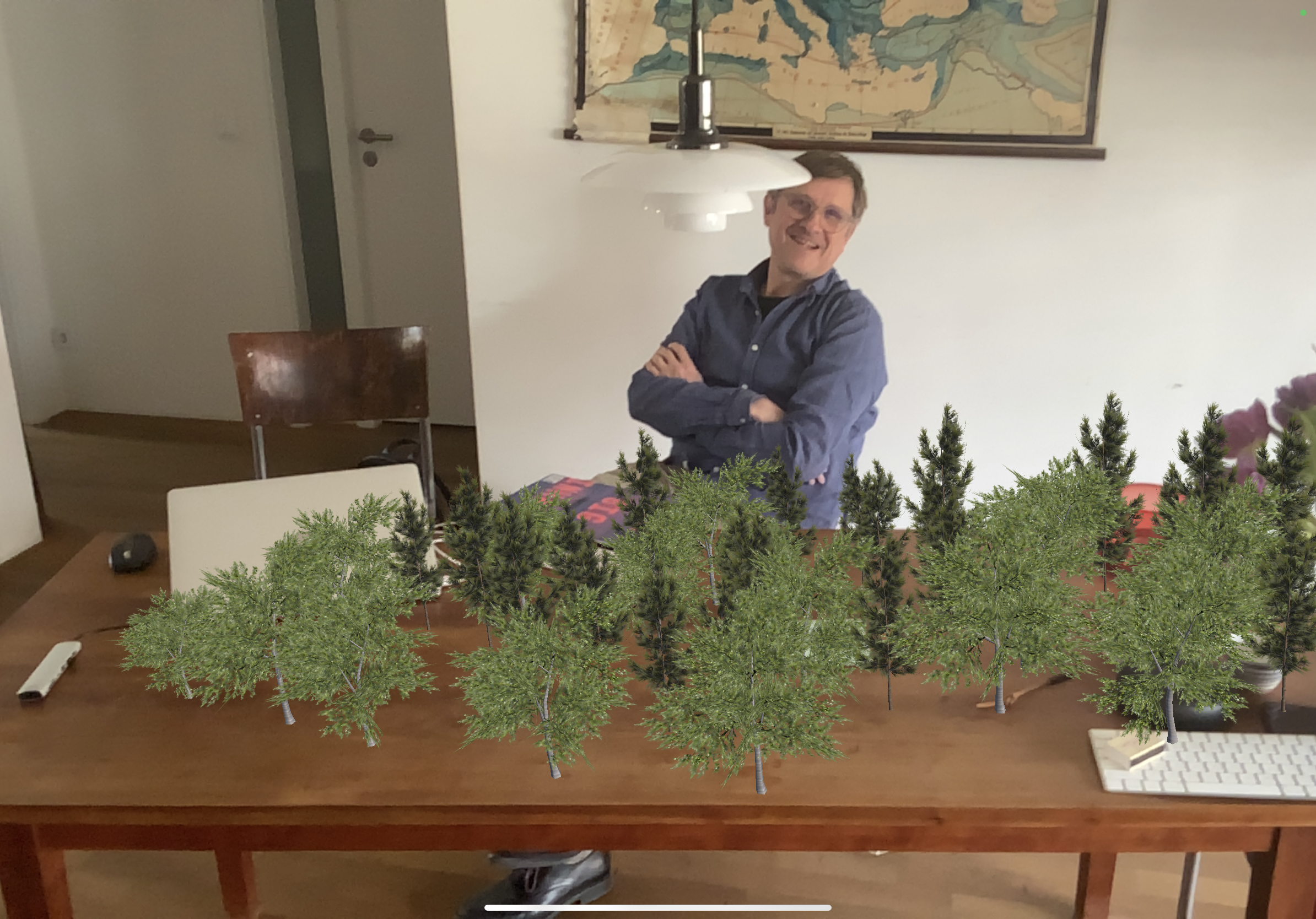
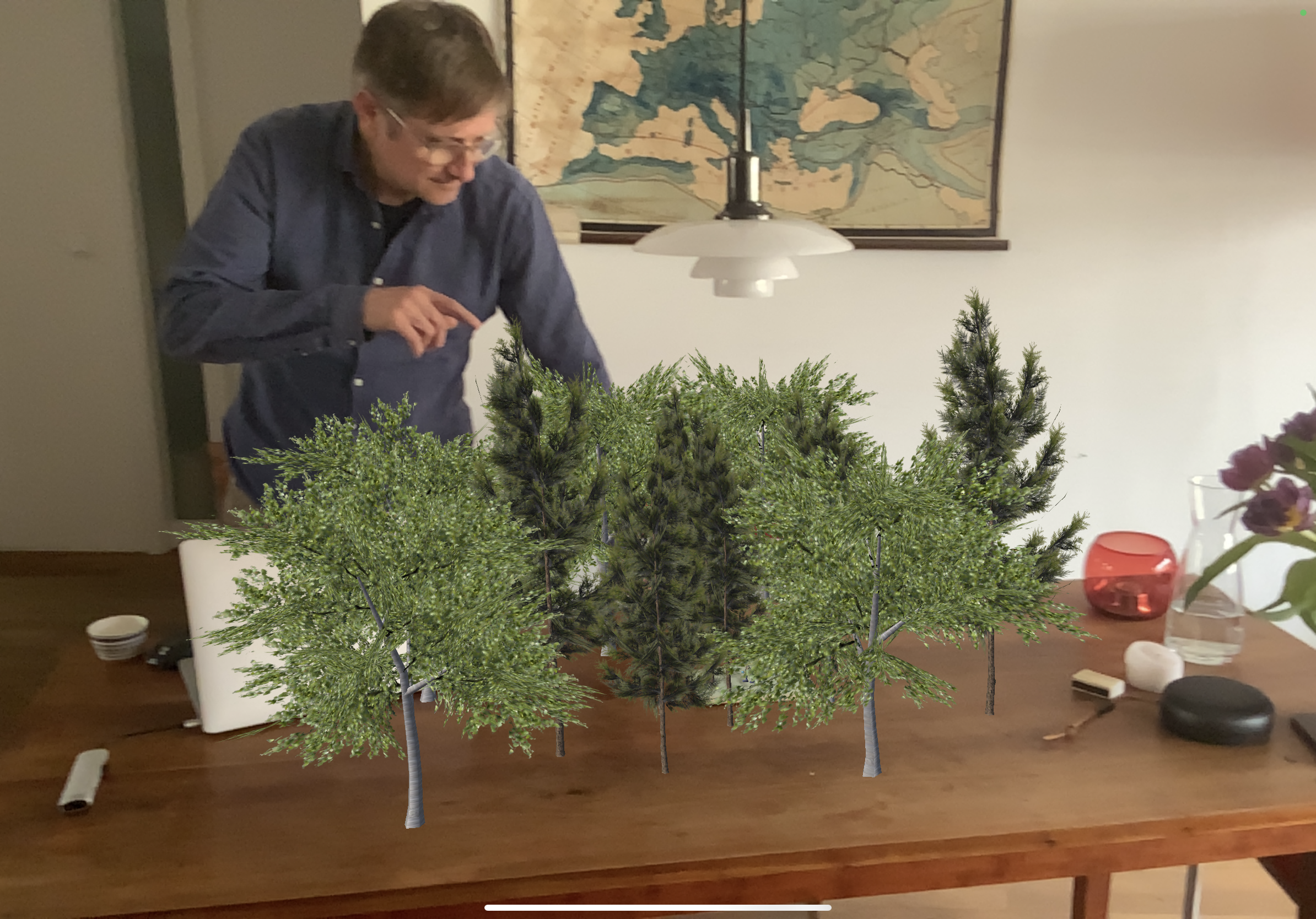
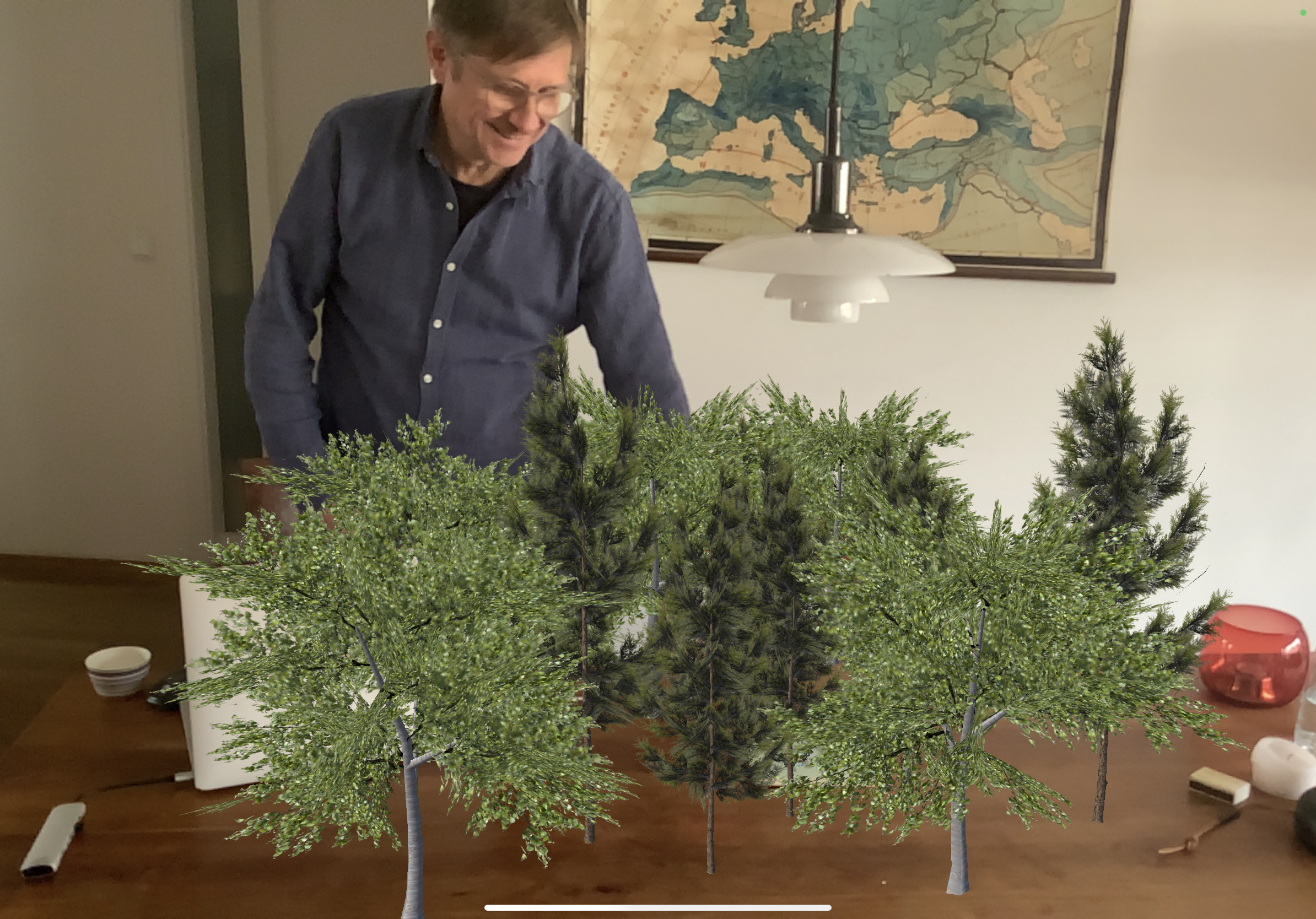
Telling a story about trees
------------------------------------------
Can we use Aero as main tool? or is it just to make quick prototypes?
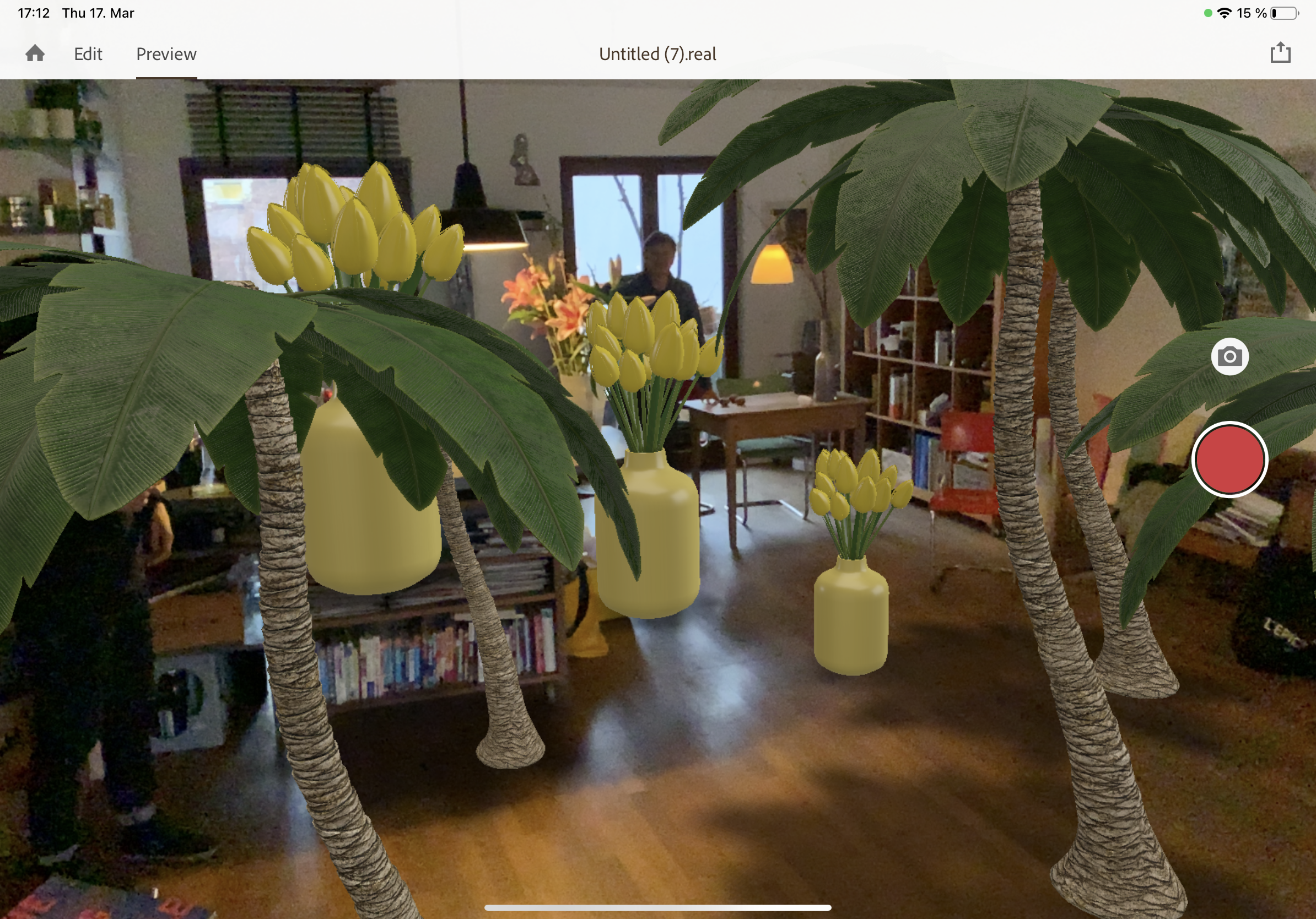
Trees in room
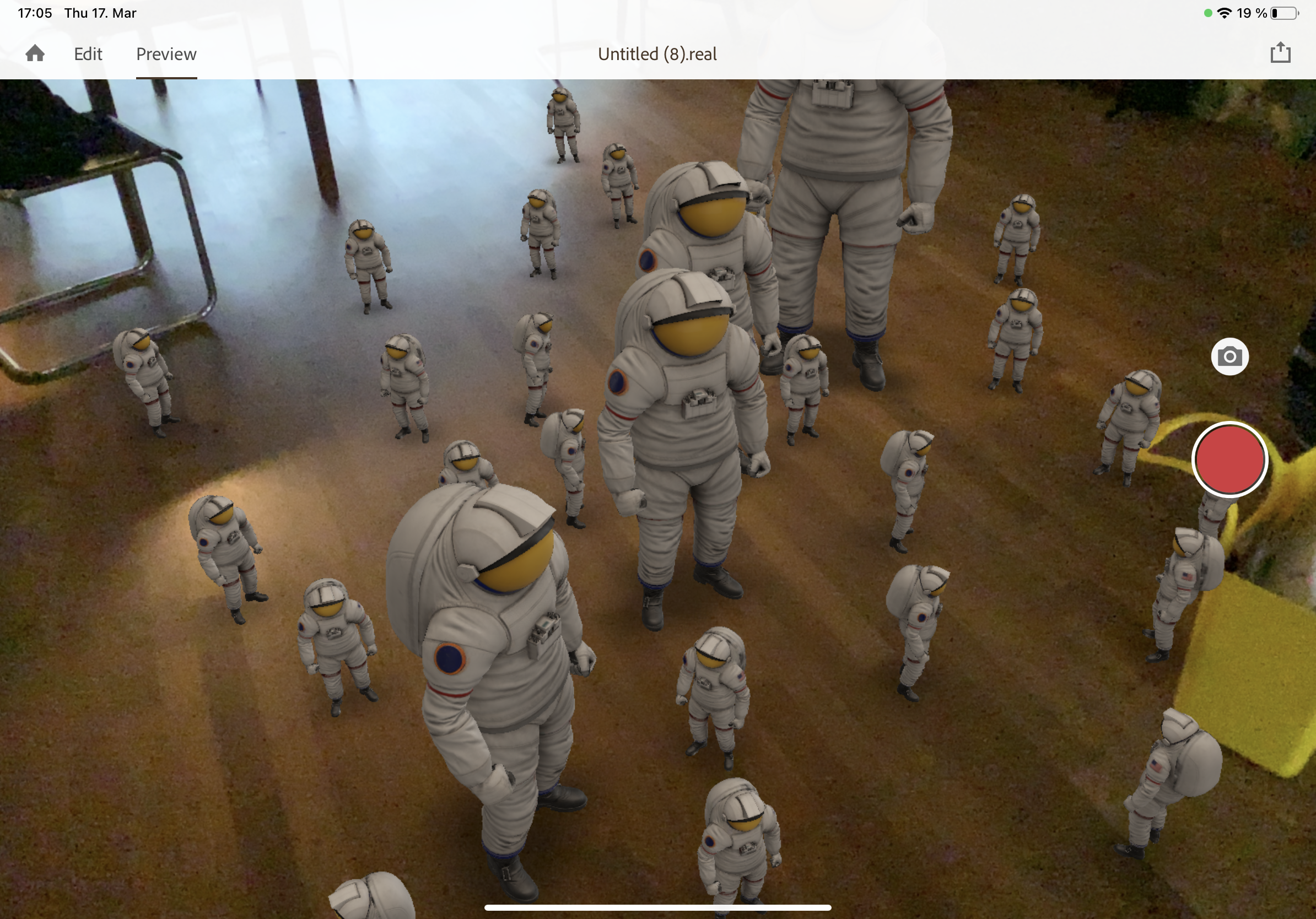
Astronauts -created and deployed quickly with Aero
------------------------------------------
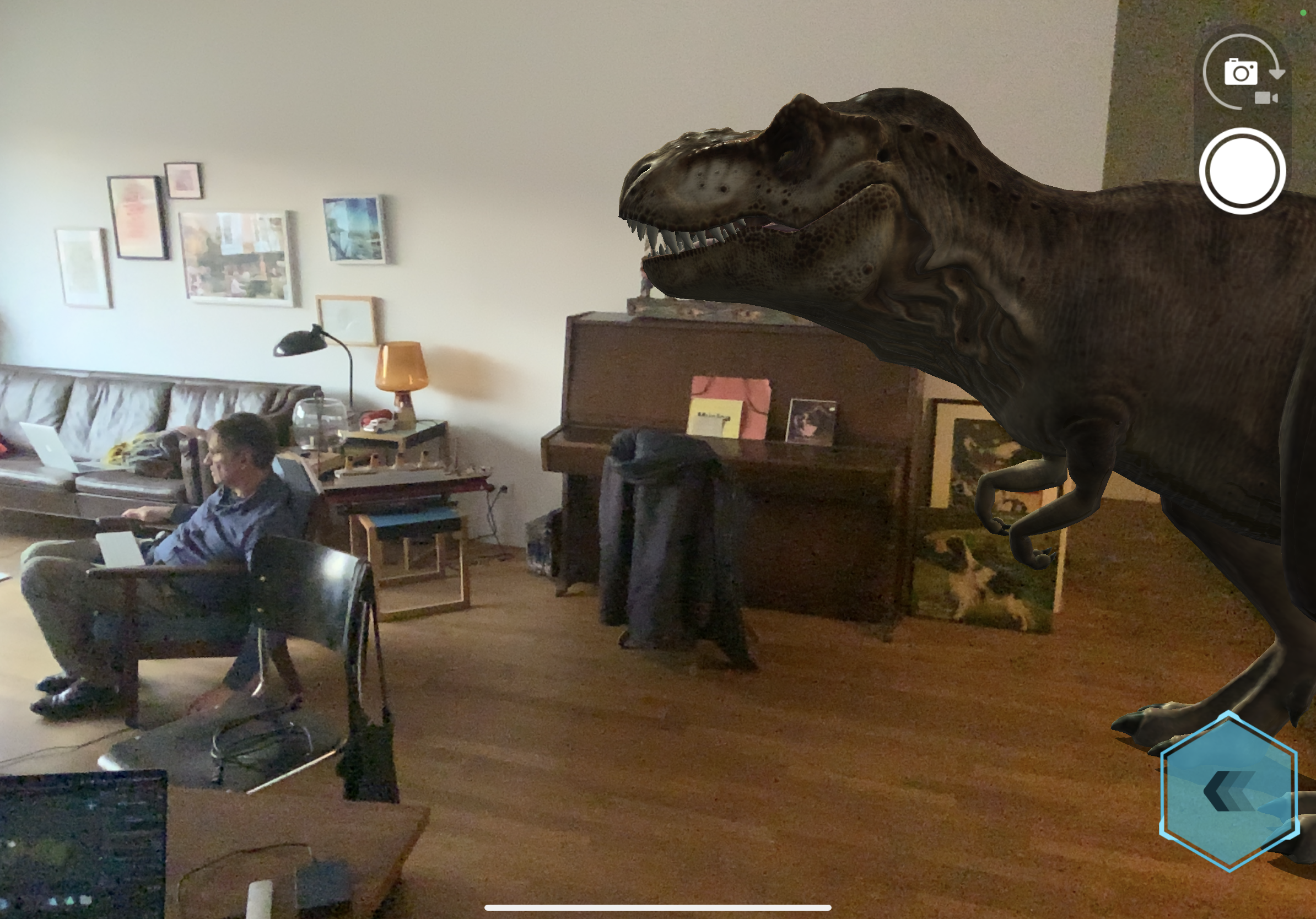
no comment
------------------------------------------
how to add triggers
What can we do with LiDAR
scanning rooms and placing them on table, scanning obejcts placing them side by side
still need to figure workflow. LiDAR -> to FBX file -> C4D to edit mesh and texture -> into UNity -> deploy to App iwth Xcode
Another big question is how do we anchor the Augment Image.
we seem to have a problem with scales.
It's the most satisfying if the image is big and a view can scan around. But this creates a probelem when the anchor image is too small.
Seemd like updating all software, xcode, to latest verions made it possible to get unreal to work. Philip tried that over the wekend
still the work flow was complicated.
decided to to move over to Unity. This was immediately easier
Made forest Landscapes. Could easily place them on the table.
then made the Punching man that you can carry around.
sehr schön
easy to imagine real people holding image markers, with people standing on them.
by changing the size of the character we got to someting that a human actor could relate to.
chanign scale seems to be importan. another forest with a giant standing in the middle.
Tech Problems: We've had a quite a deal of trouble getting Unreal Engine to deploy to IOS. This has become incrediably frustrating ansd is leading us to change our thoughts about project architechture
We started with apple certificate problems. These were necessary to solve before an u=Unreal app can be launched on the iPhone.
It seems apple has no interest in keeping its platform open and accessable to unreal apps.
still we were abel t get thorugh this problem
No however it seems like we are having some other sort of compatability problem.
And there seems to be no info available
Developed with christiane the idea of a game structure for an AR proejct.
Many people sit around a table and together build a sculpture based on items that are in some way charged
-----------------
Two days already working with Phillip and Christiane
The work is following two paths. First conceptual discussions:
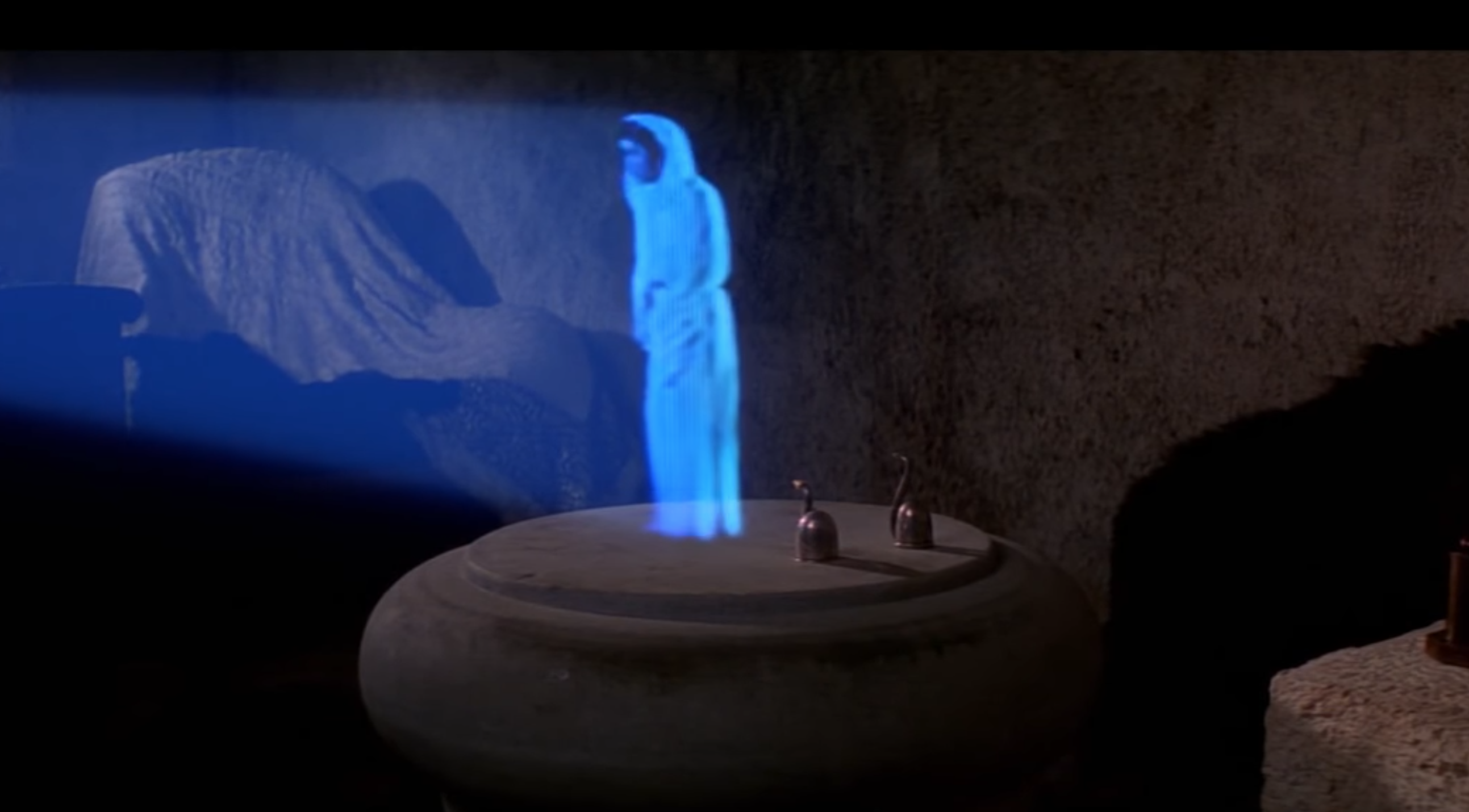
Princess Leia in Star Wars delivers a message.
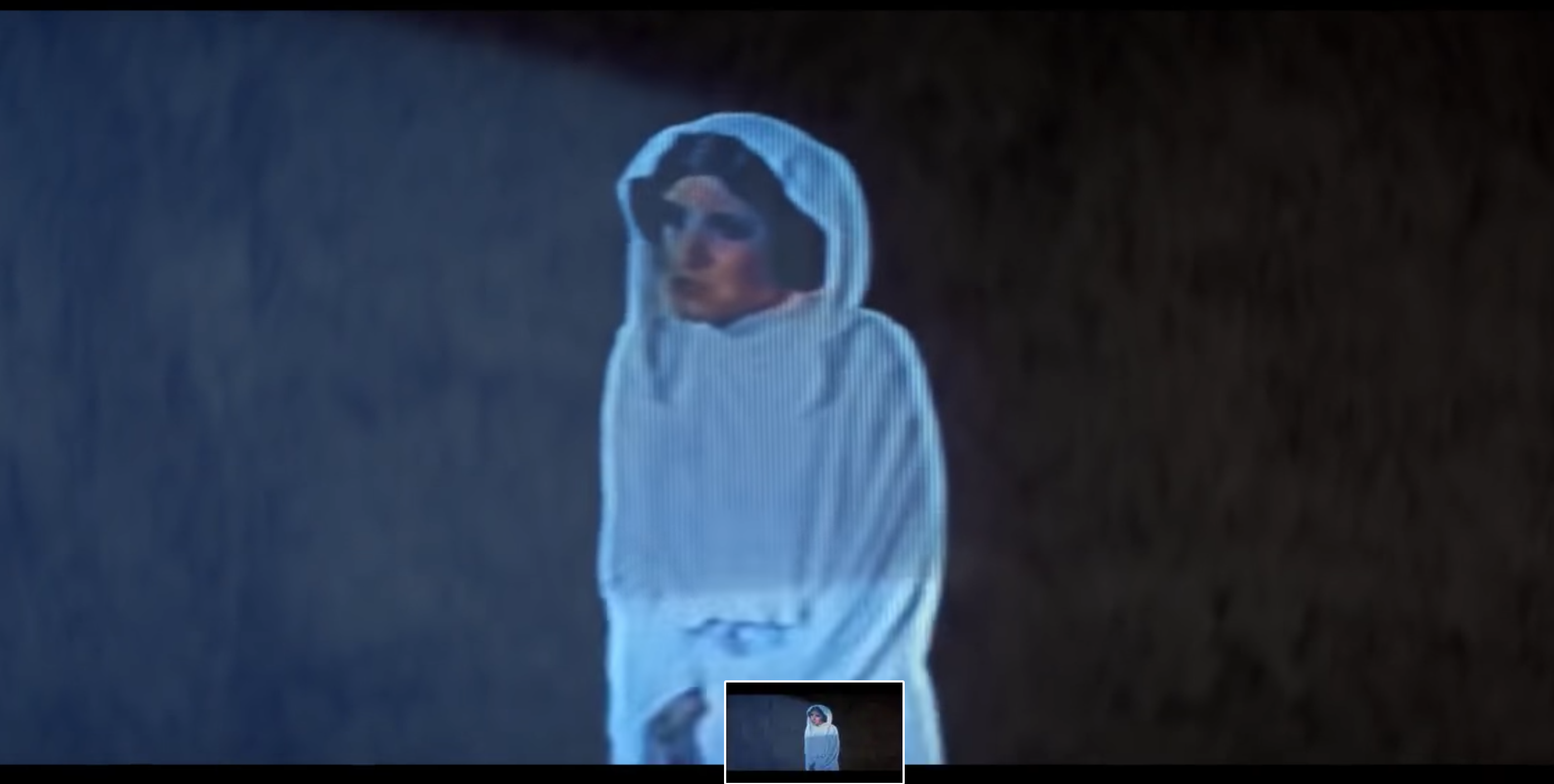
Princess Leia in Star Wars delivers a message.
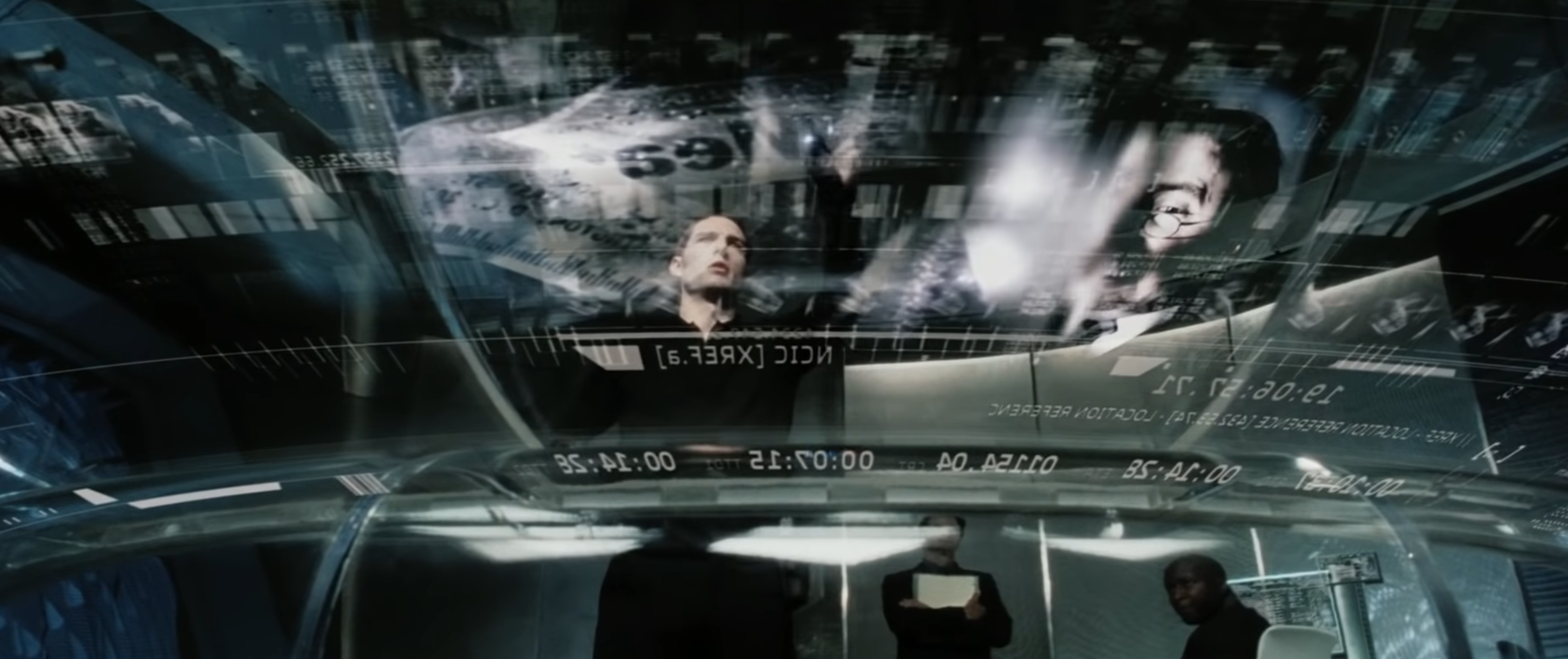
The Minority Report Screen, maybe not really AR,
still a series of virtual image that can be manipulated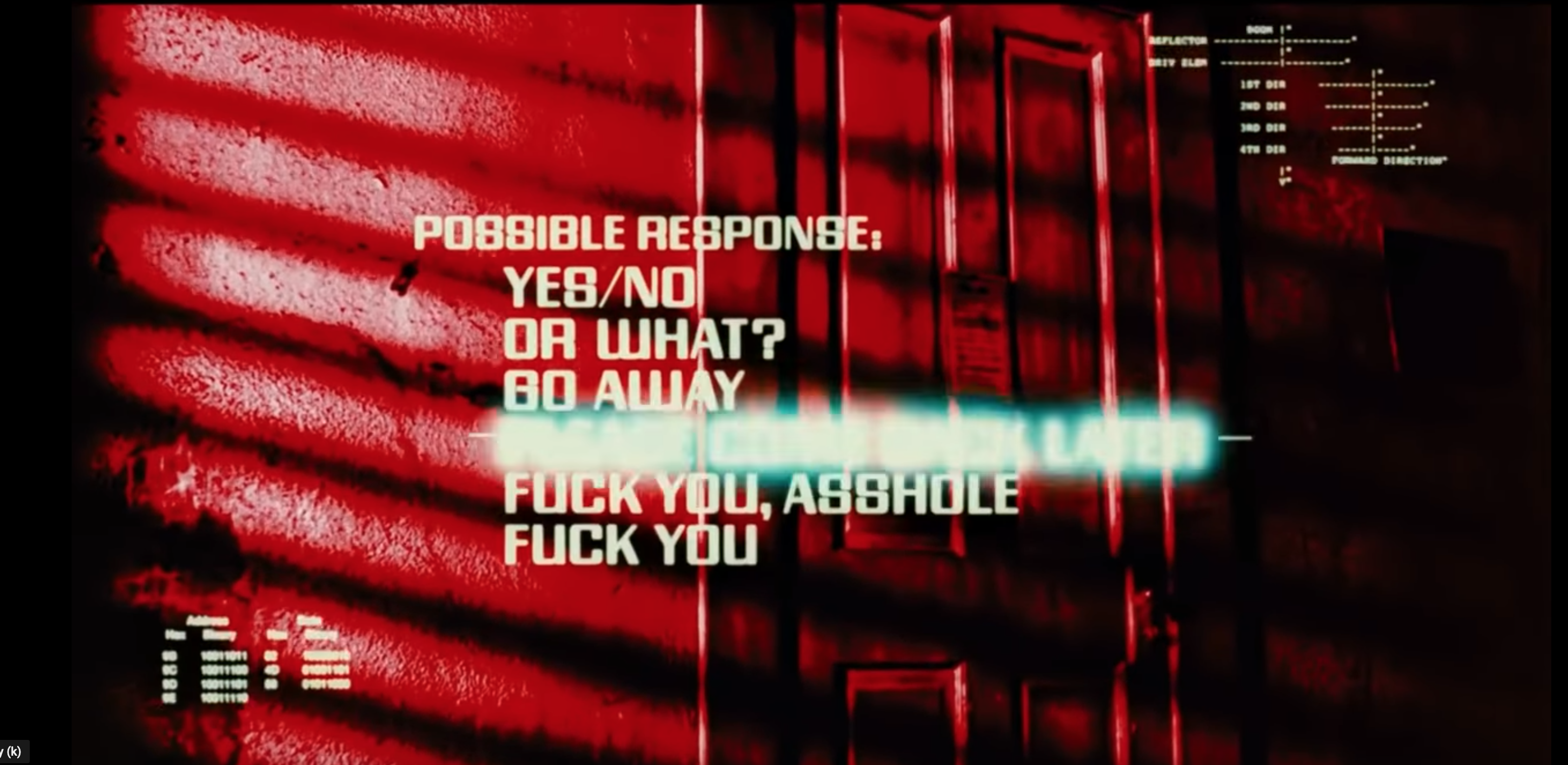
The Terminator gets Helpful info layered over the real world
One thing that constantly came up in various ways is that it is important to do something different than just putting an object in a real space where
the real space just becomes an unnoticed background.
We spoke about the need to blur the layers between real and augmented.
In a short form one might be able say that what happens to the real space is more important than what happen in the real space.
if we turn to the use of AR in a theater piece then another layer is added, or another viewpoint on the event. That means that the setup or instantiation of the AR also has to be interesting to view from the outside somehow.